
Monofloral or Polyfloral (Wildflower) Honey: What Is the Difference, and Which Should You Choose?
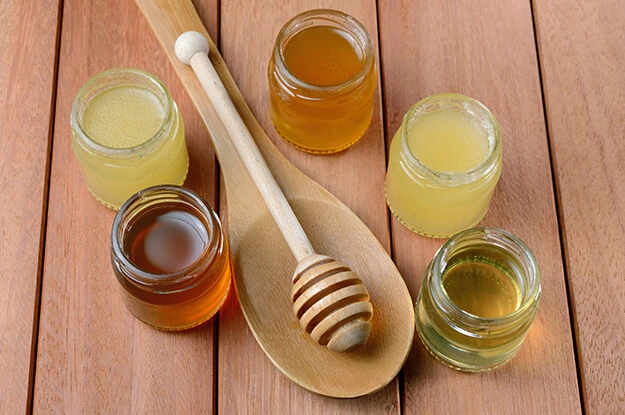
A monofloral honey comes mainly from a single flower species (lavender, thyme, chestnut); a polyfloral honey, often called “wildflower” honey, combines the nectars of several plants from the same terroir (garrigue, mountain, forest). Neither is “better”: they simply suit different uses. Here is how to choose.
Monofloral: one flower, a recognisable taste
To obtain a monofloral honey, the beekeeper places the hives in the heart of a dominant flowering and harvests just afterwards, before the bees move on to something else. The result is a honey with a clear-cut profile, consistent from one year to the next: the floral sweetness of lavender, the spicy strength of thyme, the woody bitterness of chestnut. Pollen analysis can confirm the dominance of one species, and that is what allows the honey to bear its name.
Polyfloral or “wildflower”: the portrait of a place
A polyfloral honey reflects a landscape at a given season. Garrigue honey, from the wild Mediterranean scrubland, combines thyme, rosemary, savory and rockrose from the limestone hills; mountain honey gathers the high-altitude flowers of the Pre-Alps; forest honey comes mainly from the honeydew of trees. Their taste is more complex, sometimes more surprising, and varies more from year to year. The term “wildflower” means the same as polyfloral, without specifying a terroir.
Which one should you choose? It depends on the use
| Use | Our advice | Why |
|---|---|---|
| Breakfast, toast, yoghurt | Lavender (mono) or mountain (poly) | Gentleness, creamy texture, no bitterness |
| Herbal teas, throat, winter | Thyme (mono) | Thymol, powerful aroma, Mediterranean tradition |
| Savoury cooking, marinades, cheese | Garrigue (poly) or chestnut (mono) | Holds up to cooking, aromatic or tannic notes |
| Tasting, lovers of strong honeys | Forest (poly) and chestnut (mono) | Intensity, length on the palate, minerality |
| A gift that never fails | Lavender, or the lavender and garrigue duo | The most widely loved, and a floral / aromatic contrast |
| Discovering Provence | Discovery box | A gentle mono, a strong mono, a poly for cooking |
Price, rarity and season
Monofloral honeys are generally more expensive: the harvest is short, depends on a single flowering and can fail in some years (thyme, in particular, does not yield every year). Polyfloral honeys are more regular and a little cheaper. With us: €15 per 300 g jar for the monoflorals, €13 for the polyflorals, all harvested in Provence by partner beekeepers and never pasteurised.
How to recognise them by sight and taste
- Colour: from very pale blond (lavender) to amber (garrigue, thyme) and dark brown (chestnut, forest). Colour signals intensity, not quality.
- Crystallisation: fine and creamy for lavender, slow for chestnut and forest, which are rich in fructose. See why honey crystallises.
- Nose: a monofloral honey immediately evokes its flower; a polyfloral one is more of a “bouquet”.
- Palate: look for length and evolution. A heated or blended honey is short and merely sweet.
To place each honey on the map, read the honey terroirs of Provence.
Frequently asked questions
Is “wildflower” honey of lower quality?
No. Quality depends on the harvest (maturity, no heating, no blending with imported honeys), not on the number of flowers. A good terroir polyfloral honey is as good as a good monofloral one; it is simply less predictable.
How does a beekeeper guarantee that a honey is monofloral?
Through the location of the hives, the timing of the harvest and, if necessary, pollen analysis, which measures the share of pollen from the dominant species.
Which honey for children?
From the age of one (never before, because of the risk of infant botulism), lavender or mountain honey, which are gentle and hardly bitter. Our article which honey to choose for children details ages and precautions.
Which honey can replace sugar in cooking?
A gentle polyfloral honey such as mountain for desserts, garrigue for savoury dishes. See why replace refined sugar with honey.