
Fir Honey and Forest Honey: What Are the Differences?
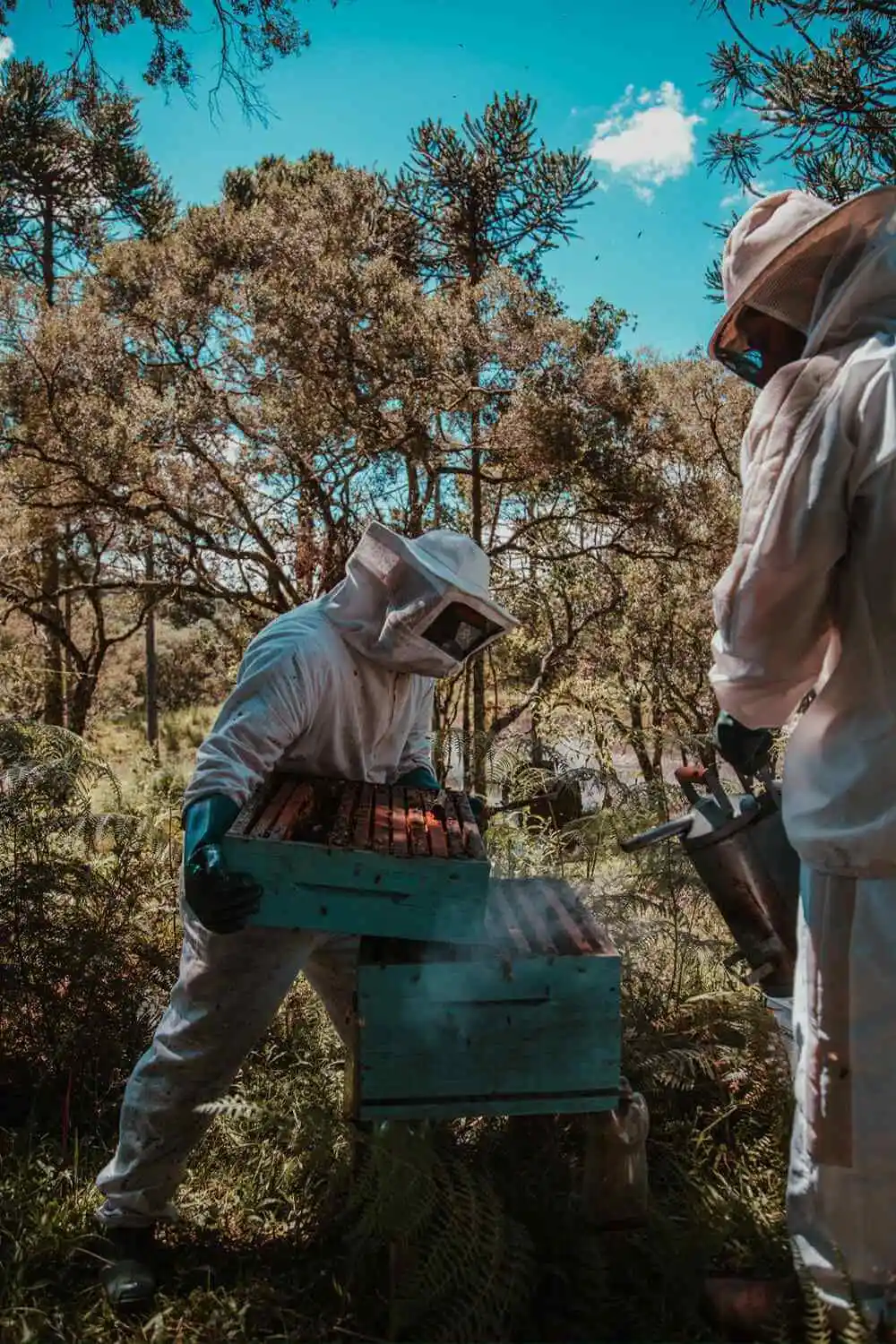
Fir honey and forest honey are both, for the most part, honeydew honeys: the bees do not forage on flowers, but collect a sugary secretion left on trees by insects. Fir honey comes mainly from fir trees, notably in the Vosges; forest honey brings together the honeydew of several tree species, like the one we select in Provence, from oaks and pines. Both are dark and malty, but their origin and aromatic profile differ.
What is honeydew honey?
Honeydew is produced by small insects, mainly aphids and scale insects, which pierce the needles, twigs or leaves of trees to feed on their sap. They retain mostly the proteins and excrete the surplus sugars as fine droplets. Bees collect these droplets from the trees, then transform them in the hive just as they would nectar.
European regulations (Directive 2001/110/EC) in fact distinguish blossom honey, or nectar honey, from honeydew honey. Honeydew depends closely on the weather: insect populations need to build up, and the humidity must allow the droplets to remain available. In some years the honeydew flow is abundant; in others it is almost non-existent.
A fir honey, from a single species, is similar in spirit to a monofloral honey. A forest honey, which mixes several trees, is closer to a polyfloral one. Our article monofloral or polyfloral honey explains this distinction.
Where does fir honey come from?
Fir honey comes mainly from the silver fir, the tree of mid-mountain forests. In France, it is harvested notably in the Vosges, the Jura, Alsace and some forests of the Massif Central and the Pyrenees, generally in summer, when honeydew is present.
The Vosges have made it a recognised speciality: “Miel de Sapin des Vosges” has a protected designation of origin (AOP in French, PDO in English). This official sign defines the harvest area and the characteristics expected of the honey. There are also fir honeys from other regions and other countries, which can be of good quality without carrying this designation: the label must then clearly state their origin.
What does fir honey taste like?
Fir honey is very dark, a deep brown often described as having greenish glints. Its taste is malty, resinous and balsamic, with notes of caramel and a less pronounced sweetness than blossom honeys. Its texture is thick and it stays runny for a very long time.
This slow crystallisation comes from its sugar composition, which is lower in glucose than that of many blossom honeys. To understand how this works, read our article why honey crystallises.
Fir honey: what benefits can you expect?
Honeydew honeys are generally richer in minerals than blossom honeys, according to routine analyses. This shows in their higher electrical conductivity, a criterion that European regulations use precisely to tell them apart. They also contain phenolic compounds, which contribute to their dark colour.
Fir honey is traditionally enjoyed in winter, in a hot drink, and it can soothe an irritated throat, like other honeys. It is not a remedy: for any health question, ask your doctor. It is also a sugary food, with about 80 g of sugars and 300–330 kcal per 100 g depending on the source, and must never be given to a child under 12 months, because of the risk of infant botulism. The same precautions apply to forest honey, whose qualities we describe in our article the benefits of forest honey.
Is our Forest Honey a fir honey?
No. The Forest Honey we select is a honeydew honey from oaks and pines, harvested in Provence by partner beekeepers. So it is not a fir honey, even though it belongs to the same family.
Its profile is close in family but different in detail: a dark amber to brown colour, a malty, woody taste, rounder than fir honey, with a discreet resinous note from the pines. Like all our honeys, it is raw, cold-extracted, never pasteurised or blended, and comes in a 300 g jar at €13. From one year to the next, the share of the different tree species varies, and its taste with it.
Fir honey or forest honey: the comparison table
| Criterion | Fir honey | Forest honey (oaks and pines, Provence) |
|---|---|---|
| Origin | Silver fir honeydew, mountain forests (Vosges, Jura, Alsace…) | Honeydew from oaks and pines, harvested in Provence |
| Official sign | PDO “Miel de Sapin des Vosges” for honey from the Vosges | No official sign |
| Colour | Very dark brown, often with greenish glints | Dark amber to brown |
| Taste | Malty, resinous, balsamic, not very sweet | Malty, woody, rounded, discreet resinous note |
| Crystallisation | Very slow: stays runny for a long time | Slow, varies with the year |
| Uses | By the spoonful, hot drinks, pain d’épices, cheese | Yoghurt, pain d’épices, marinades, mature cheeses |
How should you choose and use these honeydew honeys?
For fir honey, read the label: the country of origin must appear on it, and the PDO mention signals a honey from the Vosges that meets its specifications. For forest honey, the geographical origin and, when it is given, the type of trees tell you what taste to expect.
- By the spoonful: the best way to appreciate their malty, resinous notes.
- In a hot drink: add the honey once the tea or infusion has cooled a little, to preserve its aromas.
- In cooking: their character holds up well to heat, in a pain d’épices (French honey spice bread), a marinade or a glaze.
- With cheese: a mature or blue-veined cheese pairs well with their slight bitterness.
Frequently asked questions
Is fir honey a blossom honey?
No. Fir honey is a honeydew honey: the bees collect from fir trees a sugary secretion produced by insects feeding on the sap, not the nectar of flowers.
Why does fir honey stay runny for so long?
Its sugar composition is lower in glucose than that of many blossom honeys. And it is mainly glucose that forms crystals, so fir honey crystallises very slowly.
What is the Miel de Sapin des Vosges PDO?
It is a protected designation of origin, an official sign that reserves this name for fir honeys harvested within the defined Vosges area and meeting a set of specifications. Other fir honeys exist without this designation.
Does the Miellerie de Provence Forest Honey contain fir?
No. Our Forest Honey is a honeydew honey from oaks and pines, harvested in Provence. It shares a dark colour and malty notes with fir honey, but its taste is rounder and woodier.
Is fir honey suitable for children?
Only from one year old. Honey must never be given to a child under 12 months, because of the risk of infant botulism. After that, its powerful taste appeals mostly to seasoned palates.