
Acacia Honey or Lavender Honey: Which Should You Choose?
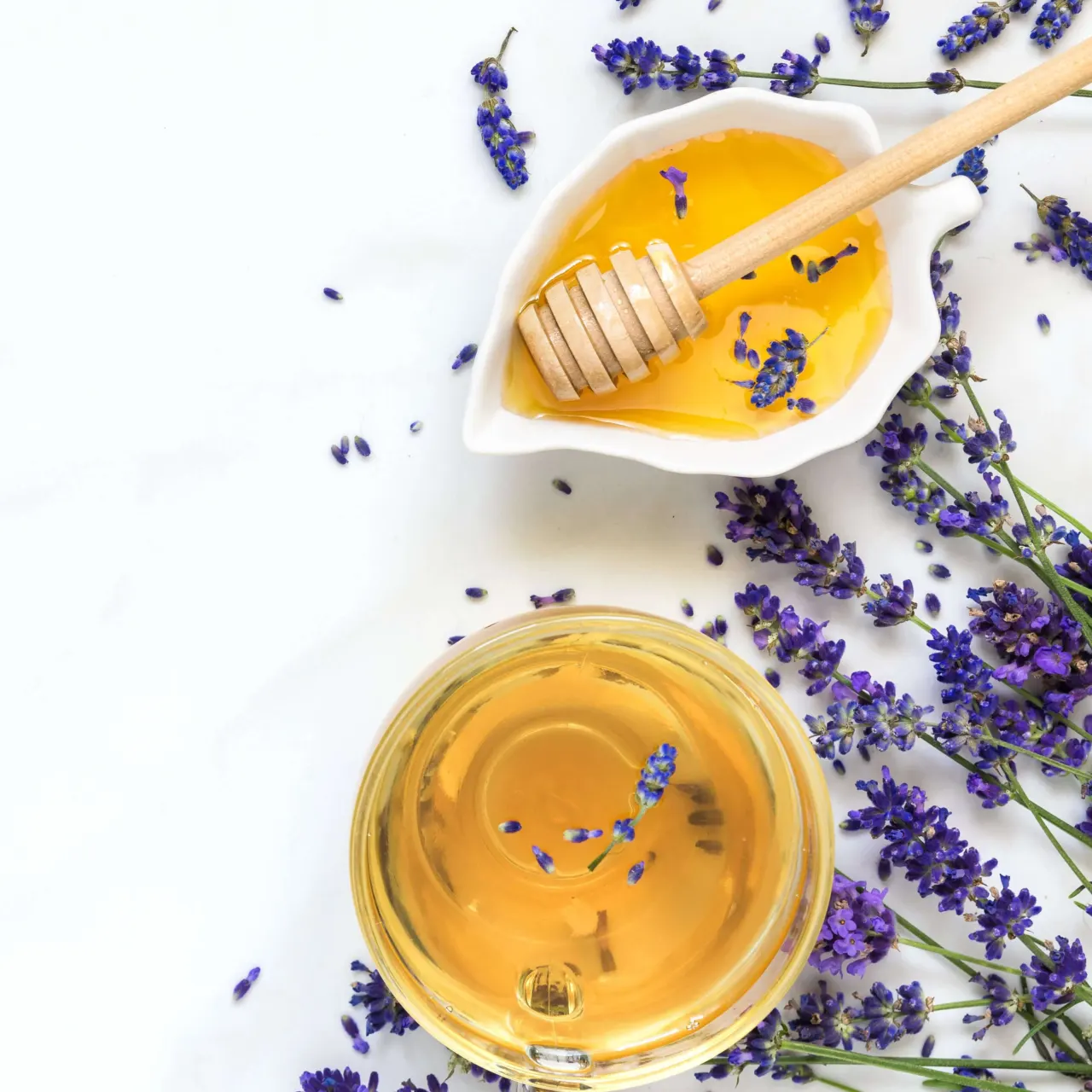
Acacia honey and lavender honey are both pale, mild honeys, but they are not alike. Acacia is almost transparent, very runny, with a discreet, faintly vanilla taste; lavender is more floral and fragrant, and crystallises quickly into a fine, creamy texture. Choose acacia if you like a neutral honey that stays runny, and lavender if you want a honey with character that remains gentle.
What are the differences between acacia honey and lavender honey?
Here are the broad lines. Every harvest is a little different, depending on the year, the location and the way the hives are managed.
| Criterion | Acacia honey | Lavender honey |
|---|---|---|
| Colour | Almost colourless to very pale yellow | Light ivory to pale gold |
| Texture | Very runny, clear | Runny at harvest, then creamy |
| Crystallisation | Very slow, sometimes several years | Fairly fast, in very fine grains |
| Taste | Very mild, discreet, notes of vanilla | Floral, fragrant, slightly fruity |
| Uses | Tea, yoghurt, children over one year old, sweetening without adding flavour | Toast, fresh cheeses, baking, milk-based desserts, gifts |
| Indicative price per kg | often €15–35 depending on origin | often €30–60 from producers |
These prices are indicative observations, not statistics: they vary with the harvest, the origin and the sales channel.
Acacia honey: mild, pale and very runny
So-called “acacia” honey actually comes from the black locust, or false acacia, a tree native to North America that was introduced to Europe in the 17th century and is now widespread along woodland edges and embankments. It flowers in white clusters, usually in May, for a short period. A wet or cold spring at the wrong moment can be enough to ruin the harvest.
What sets it apart is its composition. Acacia honey is rich in fructose and relatively low in glucose, and it is glucose that crystallises. As a result, acacia stays liquid for a very long time, which makes it the runny honey par excellence. Its taste is light and sweet, with a hint of vanilla and almost no bitterness.
Acacia honey harvested in France does exist, but a large share of what is sold in shops comes from other European countries, notably Central and Eastern Europe. As with any honey, the label must state the country or countries of harvest.
Lavender honey: floral, creamy and quintessentially Provençal
Lavender honey is harvested in summer, when the fields of lavender and lavandin bloom on the plateaus of Haute-Provence. Beekeepers move their hives there for a few weeks. Flowering is very sensitive to drought and wind, and yields vary greatly from one year to the next.
Unlike acacia, lavender honey contains more glucose. It therefore crystallises fairly quickly, within a few weeks to a few months, into very fine grains. When it happens in good conditions, this crystallisation gives a creamy, almost buttery texture that spreads easily. Its taste is floral and fragrant, with no bitterness and a length on the palate that acacia does not have.
Our Lavender Honey harvested in Provence is selected each year from partner beekeepers. It is raw, cold-extracted, and never pasteurised or blended.
Which one should you choose for your uses?
- For a child over one year old or a palate new to honey: acacia is the most neutral. Lavender honey, mild and floral, is also often popular with children. An important reminder: honey must never be given to a child under 12 months, because of the risk of infant botulism. Our article on choosing honey for children explains this in detail.
- For tea and herbal infusions: acacia sweetens without masking the aromas of a delicate tea. Lavender goes well with lemon verbena or black tea. In both cases, wait until the drink is warm rather than hot.
- For baking: acacia, runny and neutral, is easy to measure into a batter or a sauce. Lavender flavours a custard, a panna cotta, madeleines or an ice cream.
- For cheese: lavender pairs well with a fresh goat’s cheese, brousse (a soft fresh cheese from Provence) or a ewe’s milk cheese. Acacia stays more in the background.
- On toast: crystallised lavender honey stays on the bread without dripping; acacia runs, which some people enjoy on a crêpe.
- As a gift: lavender tells the story of a terroir and a season. Our guide which honey to give as a gift helps you choose according to the person.
Is a runny honey necessarily acacia honey?
No. All honeys are liquid when they are extracted. Most then crystallise, more or less quickly depending on their ratio of glucose to fructose. Acacia and chestnut stay liquid for a long time; lavender, rapeseed and sunflower crystallise quickly. We explain this process in our article why honey crystallises.
A lavender honey that stayed perfectly runny for months may have been heated. A runny acacia honey, on the other hand, is entirely normal. If you prefer a softer lavender honey, a gentle bain-marie, below 40 °C, makes it more fluid without spoiling its aromas.
Acacia and lavender are both monofloral honeys, made mainly from a single flower. If you are curious about how they differ from a wildflower honey, read our article monofloral or polyfloral honey.
And if you love acacia…
We do not sell acacia honey. We only select honeys harvested in Provence, and acacia is not one of them. If you like its mildness, two of our honeys may appeal to you, provided you are happy with a different texture.
- Lavender Honey: our mildest and most floral honey. It does not have the fluidity of acacia, but it shares its gentleness and lack of bitterness.
- Our Mountain Honey: a high-altitude polyfloral honey, balanced and rounded, which crystallises with a medium grain. It suits everyday use, from tea to cooking.
If, however, what you want above all is a honey that stays runny in the cupboard, acacia remains the best choice, and we recommend one harvested in France, from a beekeeper who clearly states its origin.
Frequently asked questions
Which is milder, acacia honey or lavender honey?
Acacia honey is the milder and more neutral of the two, with light vanilla notes. Lavender honey is still mild and free of bitterness, but it is more floral and more fragrant.
Why does acacia honey stay runny?
Because it is rich in fructose and low in glucose, the sugar that crystallises. It can therefore stay liquid for many months, sometimes several years, without having been heated.
Is lavender honey that has hardened still good?
Yes. Crystallisation is a natural process, common and quick in lavender honey. It changes neither its quality nor how well it keeps. On the contrary, it gives the honey its fine, creamy texture.
Which honey should you choose to sweeten tea?
Acacia sweetens without changing the taste of a delicate tea. Lavender adds a floral touch that goes well with lemon verbena or black tea. Stir the honey into a warm rather than scalding drink to preserve its aromas.
Can you give acacia honey or lavender honey to a child?
Yes, but only from one year old. Before 12 months, no honey should be given, because of the risk of infant botulism. After that, acacia and lavender, both very mild, are usually well accepted. For any health question, ask your doctor.