
Provence yields very different honeys depending on altitude, soil and season: lavender from the plateaus, thyme and garrigue (the wild Mediterranean scrubland) from the limestone hills, chestnut from the siliceous massifs, high-altitude flowers from the Pre-Alps, and forest honeydew. Here is how to read these terroirs, and how we choose our six honeys.
One region, several tiers of flowering
From the coast to the summits of the Alpes-de-Haute-Provence, the vegetation changes every 300 metres. Beekeepers in Provence often practise transhumance: the hives follow the flowering, from the garrigue in spring to the lavender plateaus in July, then sometimes up into the mountains at the end of summer. It is this diversity that makes six such different honeys possible within a few dozen kilometres.
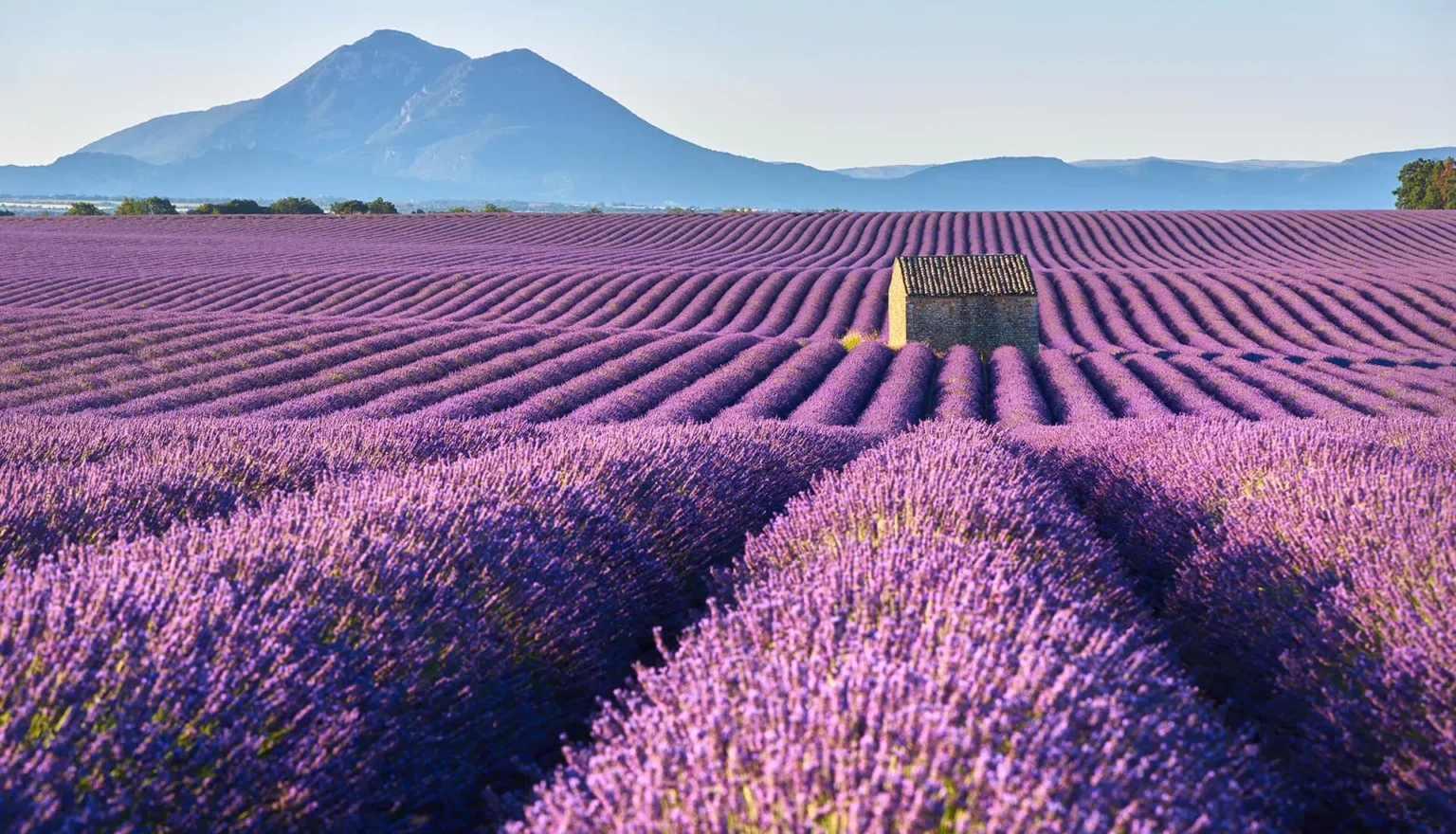
The lavender plateaus: Valensole, Sault, Albion
Between 500 and 1,100 metres above sea level, the plateaus of Valensole, Sault and Albion hold most of the lavender and lavandin fields. Flowering runs from mid-June to early August. The Lavender Honey that comes from them is pale, gentle and very floral, and quickly crystallises into a creamy texture. Our article on the best lavender honey harvests sets out the differences between these plateaus.
The garrigue and the limestone hills
On the dry limestone soils of the Luberon, the Alpilles, the Sainte-Victoire and the inland Var, thyme, rosemary, savory and rockrose flower from spring to early summer. Two honeys come from them: Thyme Honey, amber and powerful, reserved for the years when wild thyme yields enough nectar, and Garrigue Honey, a multifloral honey, round and smooth, that brings all these blossoms together.
The siliceous massifs: chestnut
The chestnut tree does not grow on limestone. In Provence it is found in the Maures massif and its foothills, where it flowers in June and July. Chestnut Honey is dark, woody, slightly tannic and bitter, and one of the richest in minerals. It stays liquid for a long time.
The Pre-Alps: Mountain Honey
Above 1,000 metres, in the Pre-Alps around Digne, the Verdon and the upper Durance valley, the meadows and heathland flower late and briefly. Mountain Honey is a high-altitude multifloral honey, complex and fruity, whose colour varies from one year to the next depending on the dominant flowers.
The forests: honeydew
Forest Honey comes not from flowers but from honeydew: a sugary secretion left on the leaves and needles of oaks, pines and firs, which bees gather when blossoms become scarce. Dark and intense, with malty and liquorice notes, it is low in glucose and crystallises slowly.
Why two honeys with the same name never taste quite the same
A honey is the product of a single year: the spring rain, the June heat, the wind during flowering. The 2026 Lavender Honey will not be exactly the same as the 2025 one, and that is as it should be. We taste every harvest before selecting it, and we would rather not offer a honey for a year than replace it with a honey from elsewhere.
How we choose
We do not produce honey: we select it from partner beekeepers based in Provence, choosing honeys harvested when ripe, cold-extracted, never heated or blended. Six honeys, one per terroir, in 300 g jars. To compare them, The Complete Collection offers a tasting from the lightest to the darkest.
Frequently asked questions
Which honey is the most characteristic of Provence?
Lavender Honey, for its renown and its volumes. But Thyme Honey, rarer and more powerful, is the one connoisseurs look for first.
What is the difference between monofloral and multifloral honey?
A monofloral honey comes mainly from a single species (lavender, thyme, chestnut): the hives are placed in the heart of the flowering and harvested just afterwards. A multifloral honey (garrigue, mountain, forest) blends several sources of nectar or honeydew; its flavour is more complex and varies more from year to year.
In which season are the honeys harvested?
Garrigue and thyme in spring and early summer, lavender and chestnut in July, mountain at the end of summer, and forest depending on honeydew years, often in summer or autumn.