

Thyme Honey
€15.00 (€50.00 / kg)
Net weight: 300 g · Origin: France (Provence) · Glass jar · Best-before date on the jar
A rare, powerful thyme honey harvested in Provence, with a spiced aroma, gathered in the garrigue (wild Mediterranean scrubland) and jarred without pasteurisation.
Amber, powerful, long finish
- Sweetness
- 2 out of 5
- Intensity
- 5 out of 5
- Texture
- Finely creamy
- Pairs with
- Herbal tea, winter throats, sheep’s cheese
- Dispatched within 2 to 3 working days from Aix-en-Provence
- Delivery €7 in France (€14 in Europe), free from €50
- Secure payment: card, Apple Pay, Google Pay
- 14 days to change your mind (unopened jars)

The terroir of thyme honey
The limestone hills of the Luberon and Sainte-Victoire
Wild thyme does not yield every year. When it does, the honey is amber and powerful, and we keep it for those who seek it out.
All terroirsDescription
Thyme honey is one of the most sought-after honeys in Provence, as much for its powerful, spiced flavour as for its traditionally recognised virtues. Ours is harvested in the Provençal garrigue, the wild Mediterranean scrubland, when the wild thyme is in flower, then jarred without pasteurisation or blending: you taste a raw honey, exactly as the bees made it.
A rare honey from the wild thyme of Provence
Thyme (or farigoule, as it is called here) flowers in spring on the dry, stony soils of the garrigue. Its flowering is short and its nectar depends heavily on the weather: in dry years, the harvest can be minimal. That is what makes thyme honey harvested in Provence such a confidential honey, produced in small quantities by local beekeepers and practically impossible to find in supermarkets in its pure, unpasteurised form.
Colour, texture and flavour
Thyme honey has an amber to orange-brown colour, which darkens slightly as it crystallises. Its texture is liquid at first, then it crystallises finely within a few months: a natural phenomenon, and the sign of an unheated honey. On the palate it is a honey of character: an intense aroma, warm and spiced notes, a hint of liquorice and remarkable length. If you prefer gentle, discreet honeys, try our lavender honey instead; if you are looking for a honey with temperament, thyme is the one for you.
The benefits of thyme honey
Thyme honey is probably the honey most highly regarded in Mediterranean tradition for comfort through the winter. Thyme is naturally rich in thymol and carvacrol, compounds whose antiseptic properties have been studied, and its honey is traditionally used for:
- soothing the throat: it is one of the honeys most often recommended for a cough or an irritated throat, in herbal tea or by the spoonful. Our article which honey for a cough? explains how to use it;
- seeing you through winter: in a lemon infusion, it makes a fine replacement for sugar while adding its own aromas;
- skin care: thyme honey has historically been used to help small wounds heal.
To find out more, read our full article on the benefits of thyme honey.
How to enjoy it
Thyme honey belongs wherever you want a pronounced aromatic note: on toast at breakfast, in a yoghurt, in herbal tea (add it off the heat to preserve its qualities), or in cooking to glaze meat, deglaze roasted vegetables or lift a goat’s cheese. Find our ideas in the Recipes section.
Where to find genuine thyme honey?
Most thyme honeys sold in supermarkets are blends of various origins, often pasteurised. For pure thyme honey, the safest option is to buy directly from a producer or an artisan honey house. At Miellerie de Provence, our honeys are harvested in Provence, checked, and dispatched directly from our workshop in Aix-en-Provence: the shortest route from hive to table. See also all our honeys harvested in Provence.
Storage
Like all honeys, thyme honey keeps for several years at room temperature, away from light and humidity, in its tightly closed jar. If it crystallises, that is a good sign. A gentle bain-marie (below 40 °C) will restore its fluidity. Our article does honey go off? answers all your storage questions.
Further reading
Why our honeys are never pasteurised, where exactly they come from (the honey terroirs of Provence), and which honey to give to whom.
Frequently asked questions
What does thyme honey taste like?
A powerful, warm and spiced flavour, with notes of garrigue and a hint of liquorice. It is a honey of character, highly aromatic, that lends lasting fragrance to a herbal tea or a slice of toast.
Is thyme honey good for the throat?
It is the honey traditionally most recommended for the throat: thyme is rich in thymol, an antiseptic compound, and the honey brings its soothing effect. A spoonful on its own or stirred into a warm herbal tea is the classic winter ritual.
Why does your thyme honey crystallise?
Because it is neither pasteurised nor heated. Crystallisation is the natural behaviour of a raw honey; it changes nothing about its qualities. A gentle bain-marie is all it takes to make it liquid again.
Where does your thyme honey come from?
It is harvested in Provence, in areas of garrigue where wild thyme grows in abundance, then jarred in small batches, never blended with imported honeys.
How to enjoy thyme honey
Herbal tea, winter throats, sheep’s cheese.
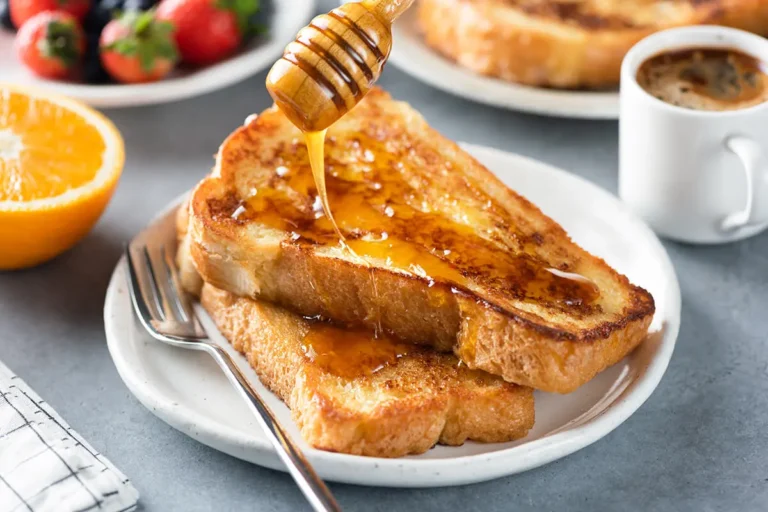
At breakfast
On toast, yoghurt or crêpes: the honey as it is, at room temperature.
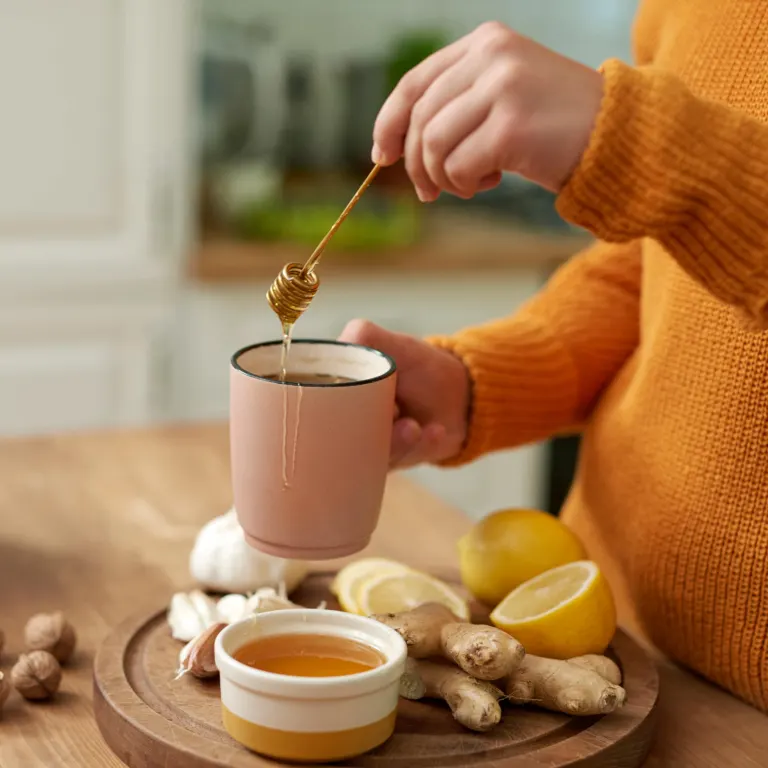
In herbal tea
Stirred in off the heat, once the drink is warm rather than hot, to keep its aromas.

In cooking
To glaze poultry, deglaze roast vegetables or lift a goat’s cheese.
14 avis · verified purchases, reviews written in French
14 reviews
You may also like…
-
Gift boxes
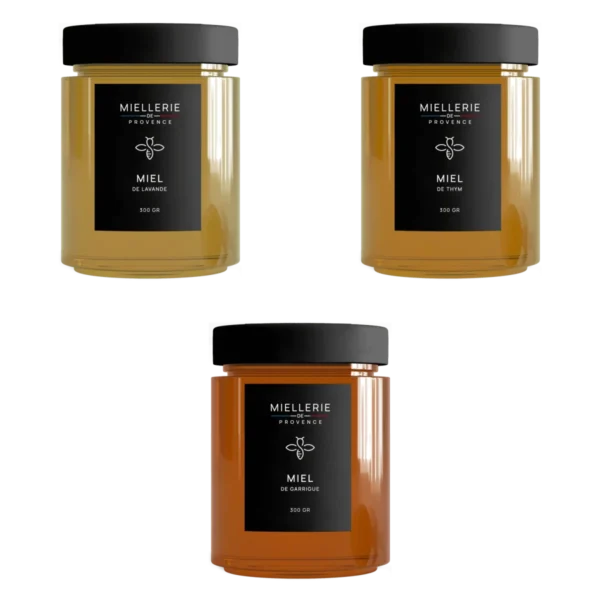
Discovery Box: Lavender, Thyme, Garrigue (3 × 300 g)
Lavender, thyme, garrigue: the Provençal trio
€39.00 (€43.33 / kg) -
Gift boxes
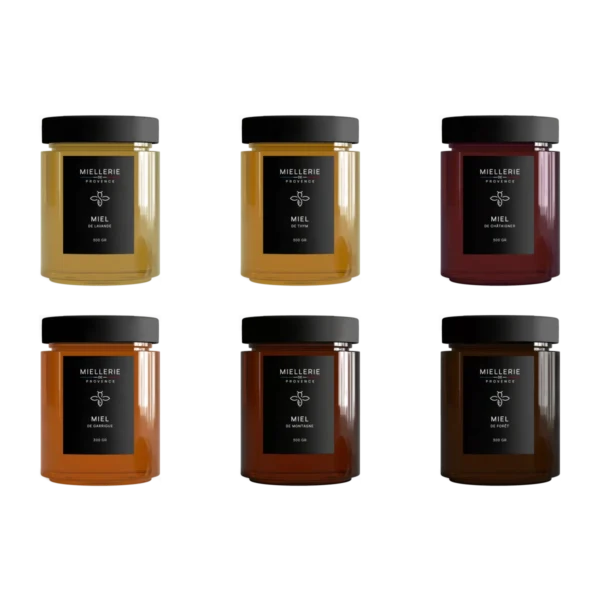
The Complete Collection: all six honeys (6 × 300 g)
Six terroirs, lightest to darkest
€75.00 (€41.67 / kg)


Julie Bernard (verified owner) –
Miel soigné, idéal pour les amateurs de bons produits.
Louis Bernard (verified owner) –
Saveur pure et naturelle, sans excès.
Thomas Garnier (verified owner) –
Texture fluide et goût authentique.
Laura Martin (verified owner) –
Produit premium, fidèle à son origine.
Hugo Perrin (verified owner) –
Un miel artisanal comme on les aime.
Nicolas Durand (verified owner) –
Goût franc et agréable.
Chloé Perrin (verified owner) –
Miel doux et parfumé, très agréable au quotidien.
Maxime Roux (verified owner) –
Un miel délicat avec une belle longueur en bouche.
Louis Fournier (verified owner) –
Très bon miel, fin et savoureux.
Alexandre Renaud (verified owner) –
Très belle qualité, je recommande sans hesiter.
Élise Moreau (verified owner) –
Saveur très naturelle, on sent la qualité artisanale.
Alexandre Fournier (verified owner) –
Excellent produit, parfaitement équilibré.
Élise Fournier (verified owner) –
Arômes subtils et goût bien maîtrisé.
Sophie Andre (verified owner) –
Miel élégant et bien travaillé.