
Does Honey Go Off? Storage, Best-Before Date and the Fridge
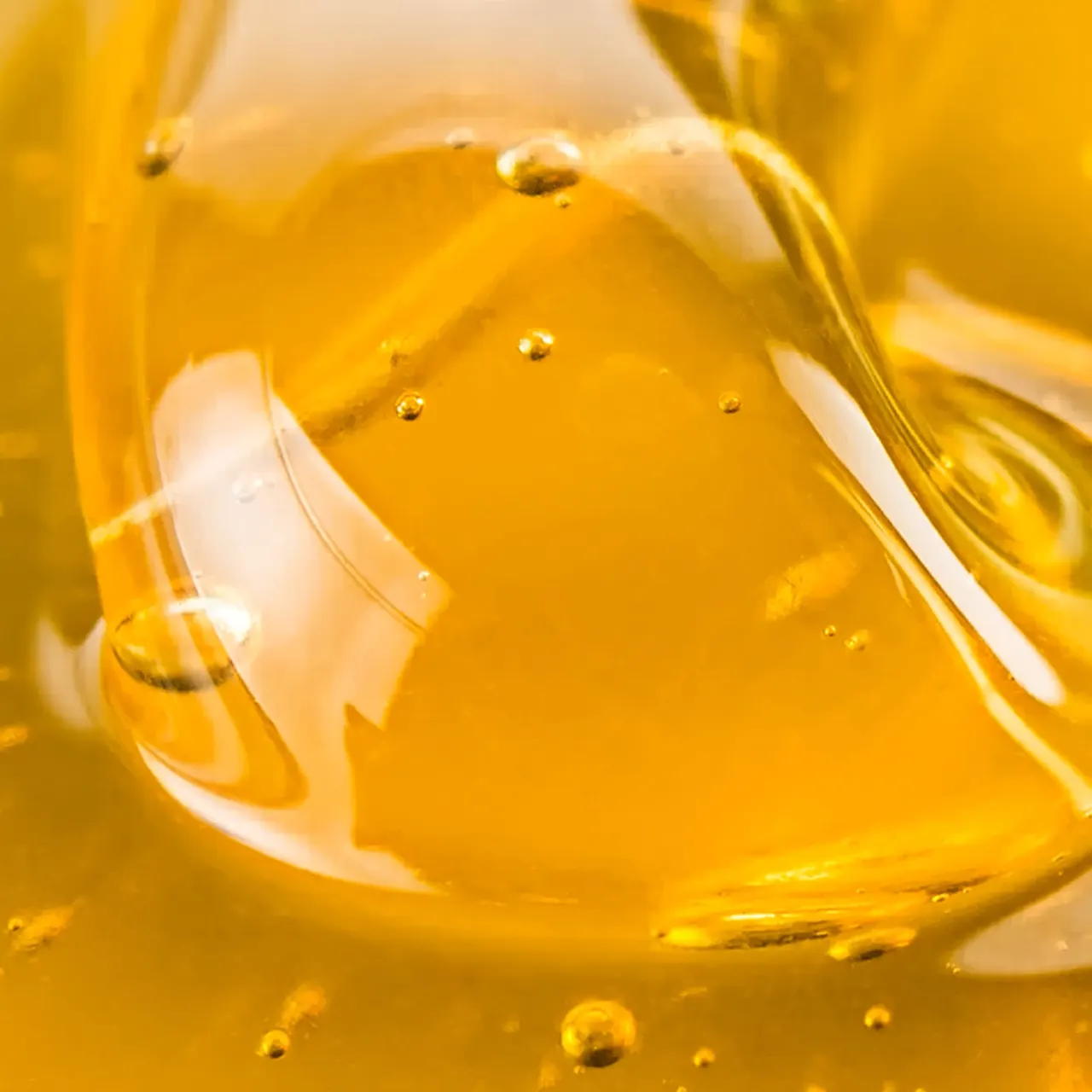
No, honey does not go off in the usual sense: stored well, in a closed jar and somewhere dry, it remains fit to eat for years. The date on the jar is a best-before date, which tells you until when its optimal quality is guaranteed, not a date after which it would become dangerous. It does not need the fridge: room temperature, away from light and humidity, suits it better.
Why does honey not spoil?
Honey is the bees’ food reserve, made to last through the winter. Its composition makes it very inhospitable to micro-organisms, for several reasons that add up.
- Very little available water. A mature honey generally contains 15 to 18% water for about 80% sugars. This water is tightly bound to the sugars: its water activity is said to be low. Bacteria and moulds cannot find the free water they need to multiply.
- Natural acidity. Honey is acidic, with a pH most often between about 3.5 and 4.5. This acidity slows the growth of many micro-organisms.
- An enzyme supplied by the bees. Glucose oxidase converts part of the glucose and produces, especially when the honey is diluted, small amounts of hydrogen peroxide. According to the available scientific work, this mechanism contributes to the stability of honey, alongside the two previous ones.
This is not absolute protection. Honey is not sterile: it can contain yeasts and spores, which remain dormant as long as it stays concentrated. This is also why it must never be given to a child under one year old, because of the risk of infant botulism. The whole point of storage is therefore to keep honey dry.
Best-before or use-by date: what does the date on the jar mean?
On a jar of honey, you will read “best before…”. This is a best-before date (DDM in France). It should not be confused with the use-by date (DLC in France), “use by…”, which is reserved for highly perishable foods.
| Benchmark | Best-before date | Use-by date |
|---|---|---|
| Wording | “Best before…” | “Use by…” |
| What it indicates | The period during which the product keeps its optimal qualities | The date after which the product may present a risk |
| After the date | Fit to eat if the product has been stored properly | Not to be eaten |
| Examples | Honey, dried pasta, coffee, tinned food | Fresh meat and fish |
The best-before date of a honey is set by whoever puts it in the jar, often around two years. Once it has passed, the honey remains fit to eat if it has been stored properly. It may simply have darkened, crystallised or lost some of its most delicate aromas. Before eating it, look at it and smell it: a honey that smells of honey can be eaten without worry.
How should you store honey?
Storing honey comes down to a few simple habits.
- A tightly closed jar. Honey absorbs moisture from the air: put the lid back on after each use.
- Somewhere dry. Use a clean, dry spoon, and avoid leaving the jar open near a steaming kettle or saucepan.
- At a stable room temperature, ideally between about 15 and 20 °C. A cupboard away from the oven is perfect.
- Away from light. Light and heat slowly darken honey and dull its aromas.
- Away from heat sources. Above about 40 degrees, honey loses some of its enzymes and volatile aromas.
The container matters little, as long as it is airtight. Glass has the advantage of passing on no odour and letting you see how the honey changes.
How long does an opened jar of honey keep?
Almost as long as an unopened jar. Opening the jar does not trigger any deterioration: it is the moisture and crumbs that get in that cause problems, not the air. An opened jar, tightly closed again and stored somewhere dry, keeps without difficulty until its best-before date, and often beyond.
The taste, however, changes over time. Pale, floral honeys, such as lavender honey, express their liveliest aromas in the months following the harvest. Stronger honeys, such as chestnut honey, have a character that makes these changes less noticeable. A 300 g jar, finished within a few weeks or a few months, lets you enjoy a honey at its best.
Should you put honey in the fridge after opening?
No. The fridge does not help honey keep any better: it keeps very well at room temperature, even once opened. If anything, the fridge has drawbacks.
- Honey becomes very hard. In the cold, it thickens considerably and is difficult to scoop with a spoon.
- Crystallisation is encouraged. Honey crystallises fastest when cool, at around 10 to 15 °C, and hardens noticeably in the fridge. A jar kept in a cupboard at around 20 °C stays soft for longer.
- Condensation. A cold jar opened in a warm room can become covered in a little moisture, when water is precisely what honey must avoid.
A jar that has been in the fridge does not become dangerous for all that. Simply take it out and let it come back to room temperature with the lid closed. If it has hardened, a lukewarm bain-marie will make it soft again.
How can you tell if a honey is no longer good?
A well-stored honey does not become dangerous with time. The only real mishap is fermentation, which occurs when the honey is too moist. Above about 18% water, the yeasts naturally present can wake up, especially in warm conditions. This happens with a honey harvested too early, or with a badly closed jar in a damp room.
The signs are easy to recognise:
- a sour, winey or alcoholic smell when you open the jar;
- foam or small bubbles on the surface, sometimes a liquid layer above the honey;
- a sharp or acidic taste that was not there before;
- more rarely, a domed lid caused by the gas produced.
In this case, the honey is no longer one to enjoy as it is. If in doubt, do not eat it. Real mould on the surface is very rare and almost always signals water or food that has got into the jar: throw it away.
Is crystallised honey out of date?
No, crystallisation is not deterioration. Almost all honeys end up crystallising, more or less quickly depending on their ratio of glucose to fructose: a few weeks for lavender, much longer for chestnut or forest honey. It is even typical behaviour for a raw, unpasteurised honey, which has not been heated to keep it liquid. Do not mistake the white veil of glucose crystals, on the sides or the surface, for mould.
If you prefer a liquid honey, a gentle bain-marie, below about 40 °C, is enough. Our article why honey crystallises explains the method.
Frequently asked questions
Can you eat honey past its best-before date?
Yes, if it has been kept in a closed jar, somewhere dry and at room temperature. The best-before date indicates optimal quality, not a safety limit. Simply check that it has no sour or alcoholic smell and no foam on the surface.
Should honey go in the fridge after opening?
No. Once opened, honey keeps very well at room temperature, between about 15 and 20 °C, in a tightly closed jar. The cold makes it hard, encourages crystallisation and does not help it keep any better.
Why does honey not spoil?
Because it contains very little available water, it is naturally acidic, and an enzyme supplied by the bees, glucose oxidase, produces small amounts of hydrogen peroxide. Together, these factors prevent most micro-organisms from developing, as long as the honey stays dry.
How can you tell if honey has fermented?
A fermented honey smells sour or alcoholic, often has foam or bubbles on its surface and takes on a sharp taste. Fermentation occurs when the honey is too moist, above about 18% water.
What is the best temperature for storing honey?
A stable room temperature, ideally between about 15 and 20 °C, away from light and from heat sources. Above about 40 degrees, honey loses some of its aromas and enzymes.