
Why Replace Refined Sugar with Natural Honey?
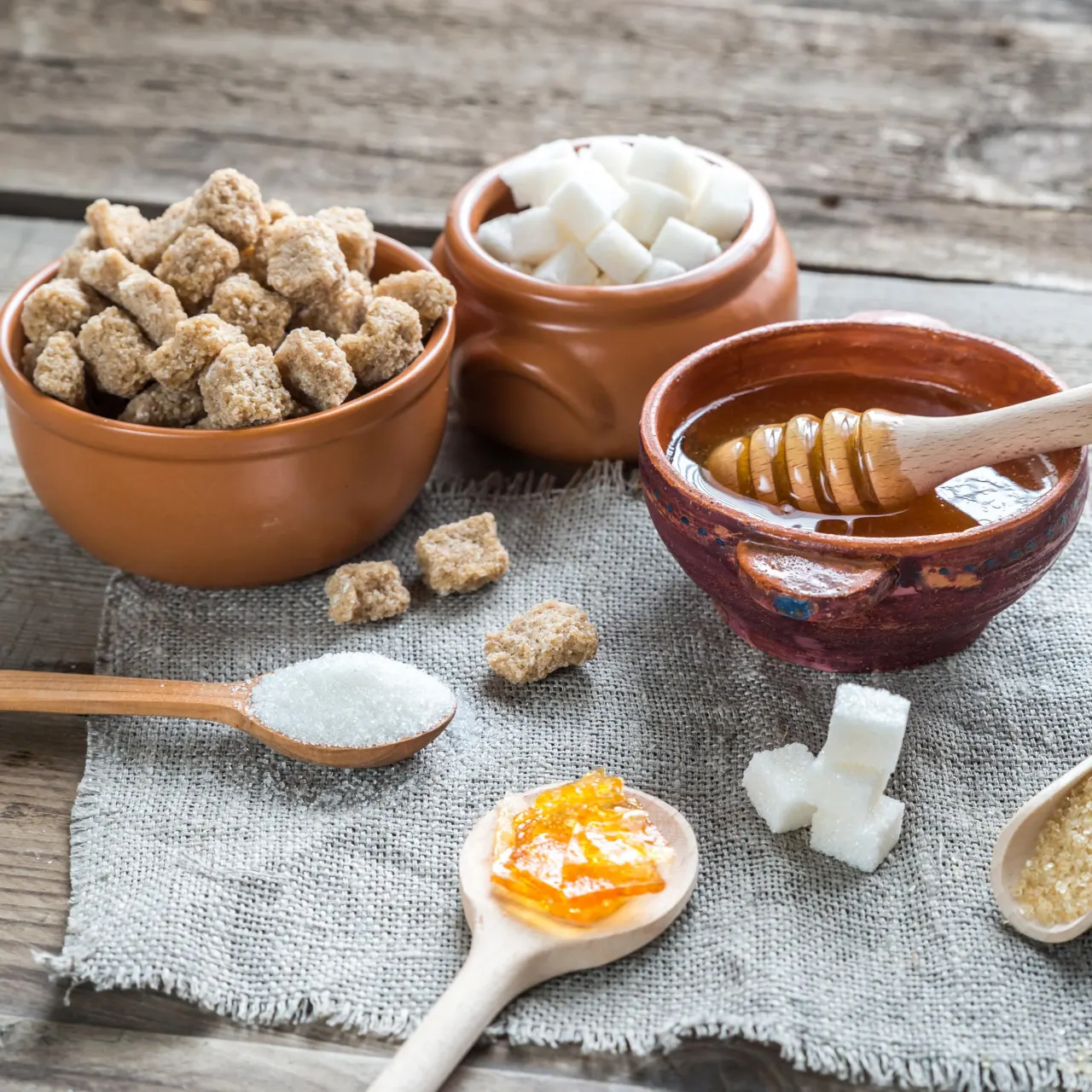
Replacing refined sugar with honey means swapping empty calories for a natural sugar which, as well as its greater sweetening power, also contains antioxidants, enzymes and minerals. In practical terms: honey is about 1.3 times sweeter than white sugar, and its glycaemic index is often lower, though it varies widely from one honey to another. For the same sweetness, you therefore consume less sugar, and you gain flavour.
At Miellerie de Provence, we do not claim that honey is a slimming food: it is a sugar, and it should be enjoyed in moderation. But between two ways of sweetening your tea or your yoghurt, the difference is real. Here is why, with figures to back it up, and how to make the switch successfully in your cooking.
Summary
- White sugar provides nothing but sucrose; honey contains fructose and glucose, but also enzymes, antioxidants and trace elements.
- Sweetening power about 30% higher: you use less.
- Glycaemic index often lower (especially for fructose-rich honeys such as chestnut).
- In cooking: allow 70 g of honey for 100 g of sugar, and reduce the liquids slightly.
- Choose a raw, unpasteurised honey: a heated honey loses most of its qualities.
Refined sugar versus honey: the nutritional match-up
White sugar is 99.9% pure sucrose: no vitamins, no minerals, no protective compounds. It is refined precisely so that it contains nothing else.
Honey, on the other hand, is made up of about 80% sugars (fructose and glucose, which the body absorbs directly) and 17% water, but it is the remaining 3% that makes all the difference:
- antioxidants (polyphenols, flavonoids), all the more concentrated the darker the honey;
- enzymes added by the bees, some of which have antibacterial properties;
- minerals and trace elements: potassium, magnesium, iron, zinc, depending on the variety;
- aromas, and this is a genuine nutritional argument: a food with real flavour encourages you to use less of it.
Less sugar for the same sweetness
Because fructose has a higher sweetening power than sucrose, honey is sweeter than sugar weight for weight. In practice, 70 g of honey replaces 100 g of sugar. Its glycaemic index, however, varies widely between honeys: published values range from just over 30 to more than 80, compared with about 65 for white sugar, with fructose-rich honeys tending to sit at the lower end of the range. This does not make honey a suitable substitute for people with diabetes: it is still a sugar, and any question about blood sugar should be discussed with a doctor or a dietitian.
How do you replace sugar with honey in cooking?
A few simple rules for a successful conversion:
- The ratio: 70 g of honey for 100 g of sugar (about 2/3 cup for 1 cup).
- The liquids: honey contains about 17% water. In baking, reduce the liquids in the recipe by about 20 ml per 100 g of honey used.
- The baking: honey caramelises faster. Lower the oven by 10–15 °C so that cakes and biscuits do not brown too much.
- Hot drinks: add the honey when the drink is warm, never boiling, to preserve its enzymes and aromas.
Which honey for which use?
The choice of variety changes the whole result:
- To sweeten everything without dominating: lavender honey, mild and floral, blends into teas, yoghurts and delicate desserts;
- To sweeten less, with more character: chestnut honey, very rich in fructose (high sweetening power, lower GI) and in minerals;
- For a less sweet taste: forest honey, malty and mineral, less sweet on the palate;
- For everyday cooking: mountain honey, well balanced, which holds up well to heat.
One essential: a raw, unpasteurised honey. Heated industrial honeys lose their enzymes and antioxidants. All that remains is the sugar. All our honeys harvested in Provence are cold-extracted and jarred without heating.
The environmental argument
Refined sugar production (beet or cane) relies on intensive monoculture, which uses a great deal of water and inputs. Artisan honey, by contrast, is the by-product of an ecological service: pollination. Every hive helps to sustain local biodiversity. We explain this in our article on why bees matter for the environment.
The limits to bear in mind
Let us be clear: honey is still a sugar, and too much sugar (of any kind) contributes to excess weight and metabolic disorders. The right habits:
- stay within the usual guidelines (the WHO recommends limiting free sugars to 10% of energy intake, honey included);
- never give honey before 12 months (infant botulism);
- if you have diabetes, talk to your doctor.
On the question of weight, our article does honey make you put on weight? looks at it in detail.
Frequently asked questions
Why replace refined sugar with honey?
Because for the same sweetness, honey provides less sugar (sweetening power about 30% higher), a glycaemic index that is often lower, and compounds that white sugar lacks: antioxidants, enzymes, minerals.
What is the conversion between sugar and honey?
70 g of honey for 100 g of sugar. In baking, also reduce the liquids by about 20 ml per 100 g of honey, and lower the oven by 10–15 °C.
Is honey suitable for cooking?
Yes, but it caramelises faster than sugar, and its enzymes do not survive high temperatures. To enjoy all its benefits, use it raw as well: in warm drinks, yoghurts, on toast.
Is honey better than sugar for blood sugar levels?
Not reliably: depending on the honey, its glycaemic index may be slightly lower than that of white sugar, or comparable. Fructose-rich honeys, such as chestnut, tend to sit at the lower end of the range. Honey is still a free sugar; if you have diabetes, ask your doctor or a dietitian for advice.