
Honey and Children: From What Age, and Which Honey to Choose
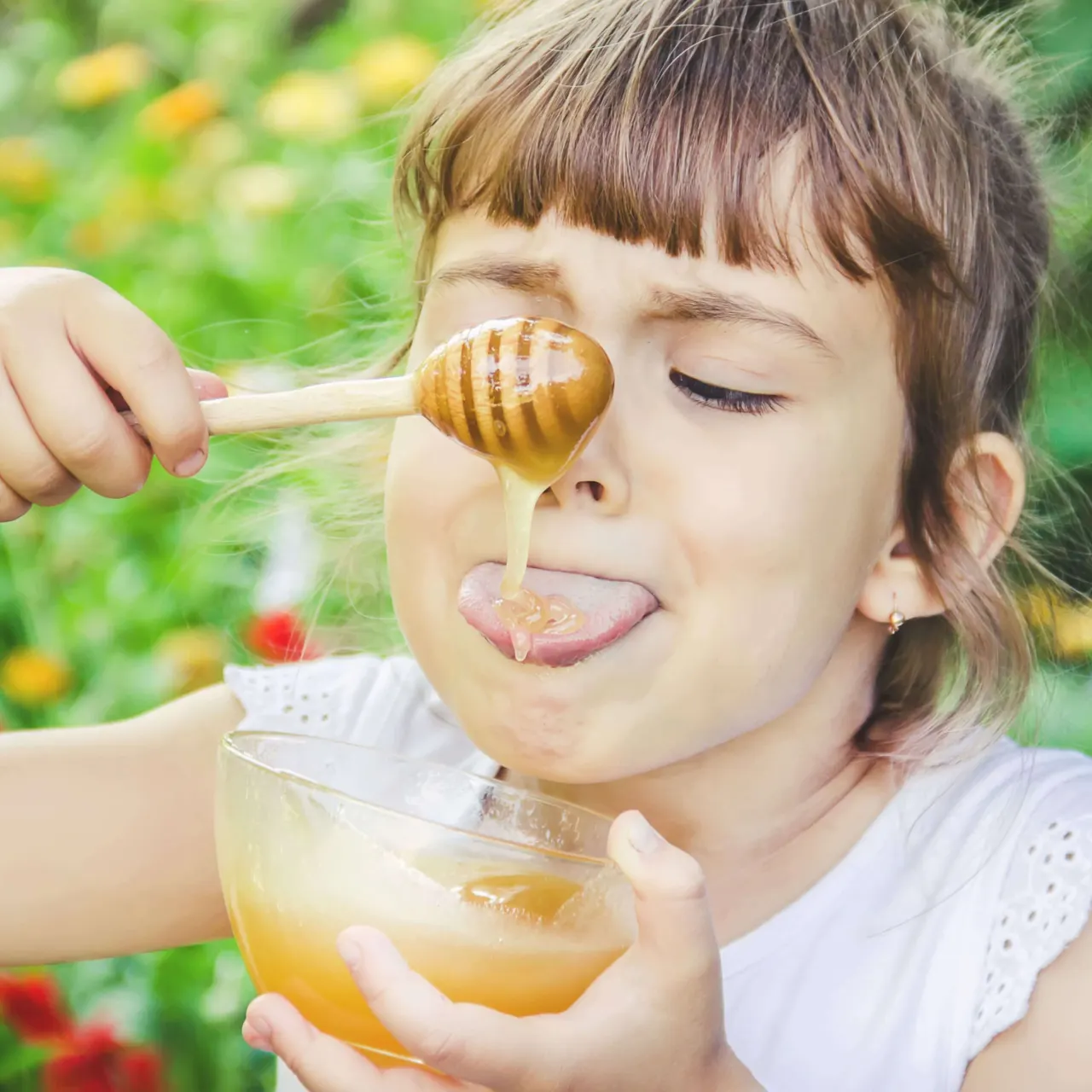
A child must never eat honey before 12 months, even baked into a cake, because of the risk of infant botulism. After the age of one, honey can become part of their diet in small amounts, as one sugar among others. Mild, floral honeys, such as lavender or mountain honey, are generally the most readily accepted.
From what age can a child eat honey?
From a full 12 months, not before. In France, the health authorities, including ANSES and Santé publique France, advise against giving honey to children under one year old. The reason is infant botulism, a rare but serious illness.
Honey can contain the spores of a bacterium, Clostridium botulinum. In adults and older children, these spores pass through the gut without causing harm. In babies, whose gut flora is still immature, they can germinate and produce a toxin that affects the nervous system. Warning signs include unusual constipation, difficulty feeding, a weaker cry, or a baby who holds their head up less well. If you have the slightest doubt, seek medical advice without delay.
This advice applies to all honey, whatever its quality and origin, whether raw or pasteurised:
- no honey from the spoon, and no honey in a bottle, a fruit purée or a yoghurt;
- no home-made cake, biscuit or pain d’épices made with honey: the spores survive normal baking temperatures;
- no dummy dipped in honey, an old habit best left behind;
- and careful reading of the labels of shop-bought products that might contain it.
How much honey can you give a child after the age of one?
After the age of one, this risk no longer applies. Honey is, however, a very sugary food: about 80 g of sugars per 100 g, according to the ANSES food composition tables. The World Health Organization classes honey as a “free sugar”, alongside added sugars, syrups and fruit juices, and recommends limiting how much of it we consume, for children as for adults.
There is no official dose of honey for children. A few common-sense guidelines:
- start with a small amount, the tip of a spoon, to introduce the taste;
- offer it from time to time rather than every day;
- use it instead of another sugar, in a plain yoghurt or on toast, rather than as well as;
- follow the advice of your paediatrician or doctor, especially for very young children.
Honey sticks to teeth. As after any sweet treat, brushing the teeth is recommended, especially when honey is eaten in the evening. And to stop the child getting used to a very sweet taste, alternate with plain toast and unsweetened dairy products.
Which honey should you choose for a child?
The best honey for a child is the one they will enjoy eating: a mild honey, not bitter, with a clear, simple taste. Children generally prefer pale honeys to strong ones.
| Honey | Taste | For a child |
|---|---|---|
| Lavender | Floral and mild, creamy once crystallised | Often popular, spreads without dripping |
| Mountain | Mild, with floral notes that vary with the high-altitude flowers | A good introduction, with a rounded taste |
| Acacia | Very mild, discreet, stays runny for a long time | Neutral and easy to measure out |
| Garrigue, thyme | More aromatic, herbaceous notes | For curious palates, a little later on |
| Chestnut, forest | Strong, sometimes slightly bitter or malty | Rarely children’s first choice |
We do not sell acacia honey, but it is a very mild option and easy to find. Our comparison acacia honey or lavender honey will help you choose between these two pale honeys.
Whichever honey you choose, opt for one of known origin, whose label states the country of harvest. A raw, cold-extracted honey keeps its aromas: it is also a way of awakening a child’s taste to the diversity of flowers.
How can you introduce honey to a child?
- On toast, at breakfast or teatime, thinly spread.
- In a plain yoghurt or fromage blanc, instead of a product that is already sweetened.
- In warm milk or a warm herbal tea, never too hot for a child’s mouth.
- Cooking together: pain d’épices, crêpes or a honey cake are a chance to discover its aromas. Our honey recipes offer ideas to share.
Introduce honey as you would any new food: a small amount, then watch over the following days for redness, itching or digestive upset. Allergic reactions to honey are rare; they may particularly affect people who are sensitive to certain pollens. If your child has a known tendency to allergies, ask the paediatrician before offering it.
Can you give honey to a child with a cough?
After the age of one, honey is traditionally used for sore throats and, according to some studies, it may help with children’s coughs, particularly at night. A small spoonful of honey, on its own or in a warm drink, is one of the comforting gestures often suggested.
It is not a medicine. A cough that lingers, a fever, difficulty breathing, or a child who is very tired or eating poorly always call for a doctor’s advice. And before the age of one, the rule does not change: no honey, even for a cough. Our article which honey for a cough covers these uses with the same caution.
Frequently asked questions
From what age can you give honey to a baby?
From a full 12 months. Before the age of one, the health authorities, including ANSES and Santé publique France, recommend giving no honey at all, in any form, because of the risk of infant botulism.
Can a baby have honey cake before the age of one?
No. The spores responsible for infant botulism survive normal baking temperatures. Home-made preparations with honey, such as cakes, biscuits or pain d’épices, should therefore be avoided before 12 months, just like pure honey.
How much honey can a 2-year-old have?
There is no official dose. Honey is a free sugar, which the WHO recommends limiting: a small amount, from time to time, in place of another sugar, is a reasonable guideline. Your paediatrician can advise you based on your child’s diet.
What is the best honey for a child?
A mild, pale honey of known origin. Lavender and mountain honey often appeal to children; acacia, very neutral, is also popular. Strong honeys, such as chestnut, can come later.
Is honey good for a child’s cough?
After the age of one, honey is traditionally used for sore throats, and some studies suggest it may help with coughs. It is no substitute for medical advice: see a doctor if the cough lingers, comes with a fever or makes breathing difficult.