
Beehive Transhumance in Provence: When Hives Follow the Flowers
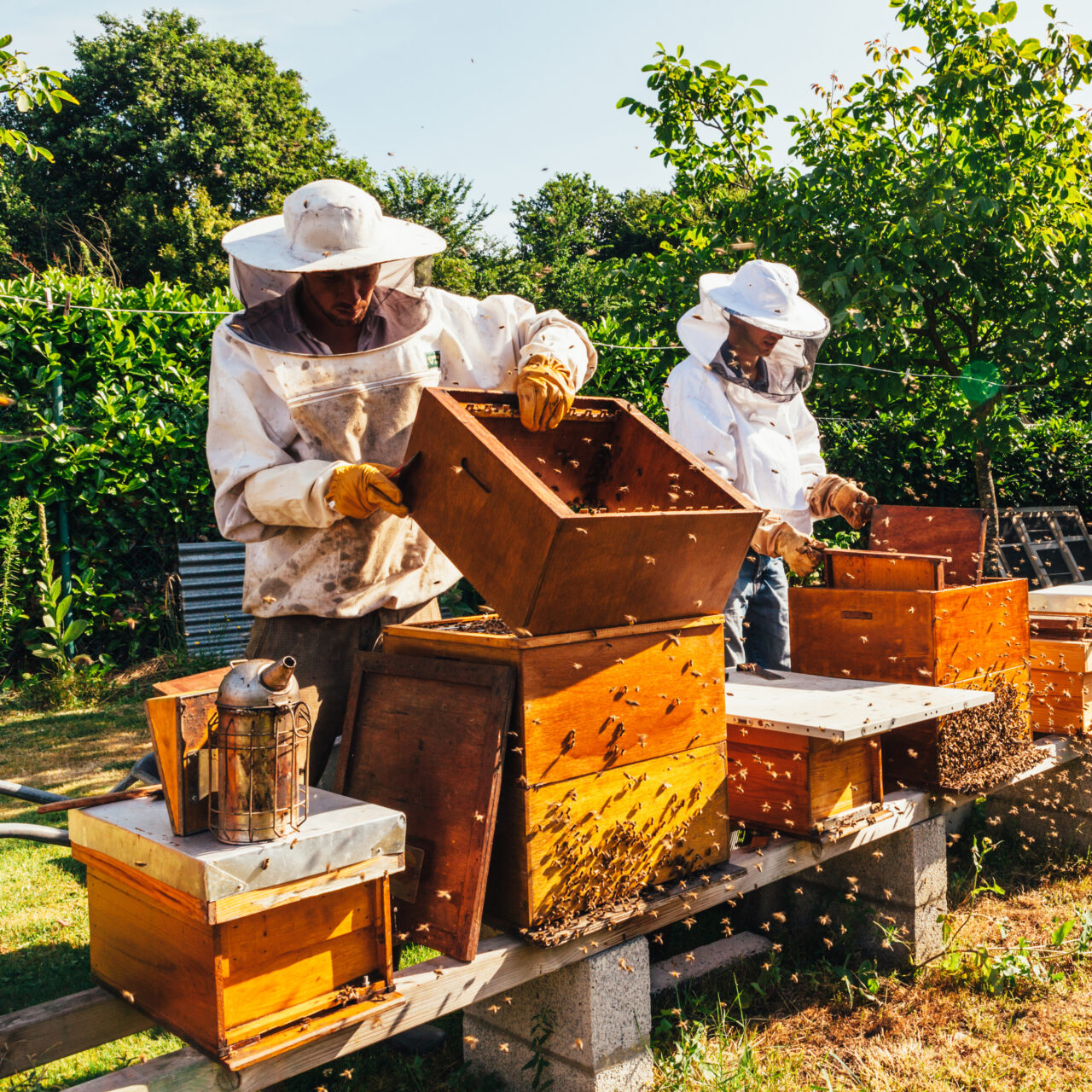
Beehive transhumance means moving hives, at night and usually by lorry, to follow the blooms as the season advances. In Provence, the beekeepers who practise it move from the thyme and garrigue of the hills in spring to the lavender of the plateaus in summer, then on to mountain flowers and forest honeydew. This journey is what makes it possible to harvest monofloral honeys such as lavender honey.
What is migratory beekeeping?
Migratory beekeeping, which the French call transhumance, is the seasonal movement of hives to set colonies down as close as possible to an abundant bloom. The word comes from livestock farming, where it describes driving flocks up to mountain pastures, an old tradition in Provence. It is built on the Latin trans, “across”, and humus, “the ground”.
A stationary beekeeper leaves the hives in the same place all year and most often harvests wildflower honey. A migratory beekeeper moves some or all of the hives several times a season. Many combine the two.
A honeybee forages within a few kilometres of its hive. For a colony to make the most of a lavender field, the hive has to sit right beside it: transhumance takes the bees to the flowers.
Why do beekeepers move their hives?
In Provence, a few dozen kilometres separate the coast from the first mountains, and each altitude band flowers in its own time. An abundant resource often lasts only a few weeks. By moving the hives, the beekeeper can chain several honey flows in a single season.
- Following the blooms: rosemary and heathers near the coast at the end of winter, thyme and garrigue in the hills in spring, chestnut in the Maures in early summer, lavender and lavandin on the plateaus in high summer, then the wild flora of the Pre-Alps.
- Making the most of honeydew: in some years, oaks and pines are covered in honeydew, a sugary liquid excreted by small insects that feed on sap. It gives dark honeys with an irregular harvest.
- Producing monofloral honeys: set down in the middle of a dominant bloom, the bees bring back mostly its nectar, which is what a lavender or chestnut honey with a clear character requires.
- Extending the season: when the garrigue is scorched by summer, the plateaus and mountains are still in flower, and colonies can build up their stores.
How does beehive transhumance work?
Moving an apiary takes several days to prepare and is done in a single night. The details vary from one beekeeper to another, but the principle stays the same.
- Choosing the site: before flowering, with the agreement of the landowner, often a farmer or lavender grower. Lorry access, shelter from the wind and a water source all matter.
- Preparing the hives: checking the colonies, adding supers if needed, and strapping each hive so that it holds together during the journey.
- Closing up at nightfall: once all the foragers are home, the entrance is closed with a mesh screen that lets air through, because the main danger of the journey is overheating.
- Loading and driving by night: the hives, often grouped on pallets, are loaded with a crane or a forklift, then the lorry travels in the cool of the night.
- Setting down and opening: before daybreak, the hives are placed level and reopened. In the morning, the bees make their orientation flights and foraging resumes.
Distances vary widely: a few dozen kilometres from the hills to a nearby plateau, much further when an apiary heads up towards the Alps. It is physical work, often done as a team, and almost always at night.
The transhumance calendar in Provence, month by month
Here is a typical route, based on the landmarks of our honey harvest calendar for Provence. Each beekeeper plans their own itinerary, and the weather often shifts these dates by several weeks.
| Month | Blooms and honeydew | Area | Possible honeys |
|---|---|---|---|
| February and March | Rosemary, almond trees, heathers, fruit trees | Coast and coastal massifs | Rosemary, heather (modest harvests) |
| April | End of rosemary, start of thyme, garrigue flowers | Limestone hills | Rosemary, thyme, garrigue |
| May | Thyme, rockroses, garrigue flowers; black locust in some valleys | Hills and valleys | Thyme, garrigue |
| June | End of the garrigue, chestnut, start of lavender in mid-June | Hills, Maures, first plateaus | Thyme, garrigue, chestnut |
| July | Lavender in full bloom, end of chestnut, high-altitude flora | Plateaus from 500 to 1,100 m: Valensole, Pays de Sault, Plateau d’Albion | Lavender, chestnut, mountain |
| August | Last lavender at altitude, mountain meadows, possible honeydew | Pre-Alps above 1,000 m, forests | Lavender, mountain, forest |
| September | Honeydew from oaks and pines in some years, ivy | Forests and mountains | Mountain, forest |
| October | Ivy, strawberry tree, honeydew in some years | Coastal massifs and forests | Forest (depending on the year) |
| November to January | Little or no forage | Sheltered overwintering apiaries | None: colonies live on their stores |
The great event remains the move up to the lavender, just before mid-June. On the Valensole plateau, lavandin generally flowers from mid-June to mid-July before being cut; higher up, true lavender takes over. After the harvest, some hives come back down, while others move on to the mountains or the forest.
What does transhumance change for the honey?
The taste of a honey depends on the flowers the bees visit. By placing the hives in the heart of a dominant bloom, then removing the supers when it ends, the beekeeper obtains a honey that owes most of its character to a single plant: a monofloral honey, which we compare with wildflower honeys in our article on monofloral and polyfloral honey.
Lavender honey is the clearest example. Lavender grows on the plateaus, far from the hills where many apiaries spend the spring: without transhumance, it would be very hard to harvest. It is pale, floral and mild, and crystallises finely into a creamy texture. Like any monofloral honey, it is seasonal: drought or mistral decide the harvest.
Thyme honey, amber and spicy, is born in spring in the garrigue, from a short bloom that is sensitive to drought. Chestnut honey, dark brown and woody, comes from chestnut woods that flower in June and July. Mountain honey is a wildflower honey harvested at the end of the season from high-altitude wild flora.
An ancient practice: from mule to lorry
Moving hives to follow the flowers is nothing new. In the 1st century, the Roman author Pliny the Elder already described hives carried by boat along the Po, in Italy, to make the most of the blooms along the river.
In Provence, beehive transhumance long moved at the pace of pack animals. Traditional hives, made of straw, wood or bark, travelled by night on mule back or by cart, over necessarily short distances.
Two developments changed everything. The movable-frame hive, which spread from the 19th century, made it possible to add supers and harvest honey without destroying the combs. Then, in the 20th century, the lorry replaced the mule: many hives could be moved in a single night, from the hills up to the plateaus and the mountains. The essential gestures have not changed, though: leave at nightfall and arrive before daybreak.
What are the constraints for bees and beekeepers?
Transhumance takes skill. Poorly prepared, a journey can weaken a colony; done well, it offers the colony plenty of food just when it needs it.
- Heat: shut in, the bees cannot ventilate properly. Ventilation, night-time travel and quick setting down limit the risk of overheating.
- Stress of transport: vibrations and a change of place unsettle the colony, so beekeepers generally avoid moving a hive that is too weak.
- Water: on the dry plateaus in high summer, bees need a water source close by.
- Competition between apiaries: a bloom can only feed a limited number of colonies. Too many hives in one place, and each gathers less.
- Crop treatments: their use during flowering is regulated to protect pollinators, and dialogue with farmers matters a great deal.
- The rules: in France, every beekeeper declares their hives and their locations each year, and the distances to keep from houses and roads are set locally.
Every transhumance remains a bet on the weather. Done well, though, it lets the bees find flowers when the garrigue is dry and go into winter with good stores.
Transhumance and the honeys in our shop
Miellerie de Provence does not practise transhumance itself and owns no hives. Each year we select six honeys harvested in Provence by partner beekeepers, then jar them in Aix-en-Provence. Each beekeeper organises the season in their own way: this article describes the practice in general, not that of any particular apiary.
The blooms it follows, however, are all found in our range: plateau lavender in high summer, hillside thyme in spring, chestnut in early summer (€15 per 300 g jar each) and the high-altitude flora of mountain honey (€13). Garrigue honey and forest honey, made from the honeydew of oaks and pines, complete the selection. All are raw, cold-extracted, never pasteurised, unblended and with no added sugar.
To place each one on the map, our page on honey terroirs in Provence presents the hills, plateaus, massifs and mountains. And to taste that journey at the table: French toast with lavender honey or roasted carrots with honey and thyme.
Frequently asked questions
What is bee transhumance?
Bee transhumance, or migratory beekeeping, is the seasonal movement of hives, usually by lorry and at night, to set colonies down near an abundant bloom. In Provence, it follows the thyme of the hills in spring, the lavender of the plateaus in summer, then mountain flora and forest honeydew.
Why are beehives moved at night?
At night, all the foragers are back inside: by closing the entrance in the evening, the beekeeper takes the whole colony along. The cool of the night also limits the risk of overheating during the journey.
Is transhumance bad for bees?
Transport is a delicate moment: heat, vibrations and a change of place can tire a colony. Well prepared, with ventilated hives, a night-time journey and water at the new site, it gives the bees access to plentiful food when flowers are scarce elsewhere.
When are hives taken up to the lavender fields?
Generally just before flowering, around mid-June. Lavender and lavandin flower from mid-June to early August depending on altitude, and lavender honey is harvested at the end of flowering, most often between July and August.
Do you need transhumance to make lavender honey?
Usually, yes: lavender is grown on the plateaus, often far from spring apiaries, and lavender honey requires hives in the heart of the fields during flowering. A beekeeper based permanently near the lavender fields can, however, harvest it without moving far.