French Toast with Lavender Honey
Slices of brioche soaked in a lavender honey custard, browned in butter and drizzled with honey just before serving.
- Preparation10 min
- Cooking15 min
- Serves4

French toast with honey, or pain perdu, is an indulgent way to bring day-old brioche or bread back to life: the slices are soaked in a mixture of eggs, milk and honey, then browned in butter. Lavender honey, both mild and floral, flavours the custard and is poured a second time just before serving, off the heat, so that it keeps all its aromas.
Method
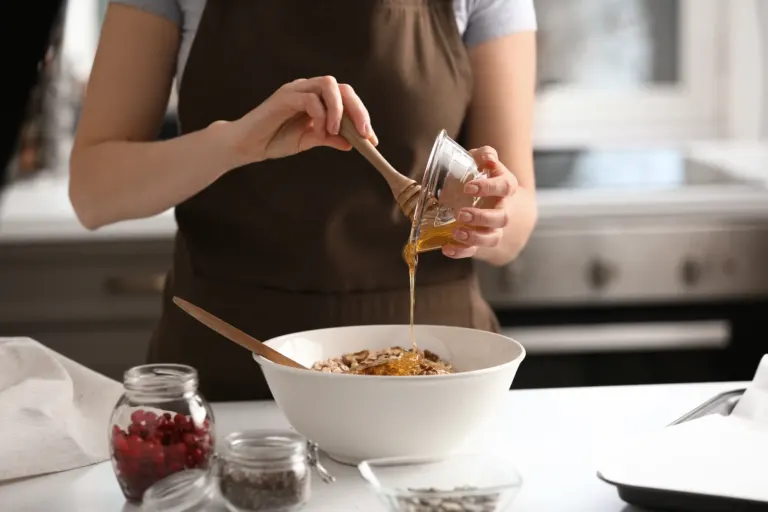
- Make the honey milk Warm 5 cl of the milk, then stir in 2 tablespoons of lavender honey: honey dissolves poorly in a cold liquid.
- Make the egg mixture In a shallow dish, whisk the eggs with the rest of the milk, the honeyed milk, the vanilla, cinnamon and salt.
- Slice the brioche Cut the brioche or bread into slices about 2 cm thick. Slightly stale bread absorbs the custard better without falling apart.
- Soak the slices Dip the slices one at a time into the custard: 10 to 15 seconds per side for brioche, 30 seconds to 1 minute for drier bread. Let them drain for a few seconds over the dish.
- Heat the butter Melt a knob of butter in a frying pan over a medium heat. When it foams, add the slices without crowding them.
- Brown both sides Brown for 2 to 3 minutes per side, adding a little butter between each batch. Too high a heat browns the outside before the centre has set.
- Keep warm Keep the slices warm in the oven at 100 °C while you cook the rest.
- Drizzle with honey and serve To serve, drizzle each slice with a teaspoon of lavender honey and add fresh fruit if you like.
Which honey should you choose?
Lavender honey harvested in Provence is the natural partner for French toast: its floral sweetness blends with the vanilla and butter without taking over. For a more aromatic version, with notes of dried herbs, try garrigue honey. Lavender honey often crystallises in a fine, creamy way; if it is too thick to drizzle over the slices, stand the jar in a warm water bath for a few minutes, without going above 40 °C. To understand why this happens, read our article on honey crystallisation.
Tips and variations
- Brioche gives a melt-in-the-mouth French toast; country bread or a stale baguette gives a more rustic result that can take a longer soak.
- The honey sweetens the custard enough: there is no need to add sugar. It does, however, colour faster during cooking, hence the medium heat.
- In autumn, serve with apples or pears pan-fried in butter and finish with a drizzle of garrigue honey.
- A pinch of fleur de sel just before serving lifts the honey and butter.
Storage
French toast is best eaten freshly cooked. Any unused custard keeps for 24 hours in the fridge, covered with cling film. Cooked slices keep for a day in the fridge and can be reheated for a few minutes in a frying pan. Discover more breakfast ideas in our honey recipes.
Frequently asked questions
Which bread should you use for French toast?
Day-old brioche or sandwich bread gives the softest French toast. Country bread or a stale baguette also works, as long as you let it soak a little longer.
Should you add sugar to honey French toast?
No. The honey stirred into the custard and the drizzle poured on to serve are enough to sweeten the French toast, while giving it a floral fragrance.
How do you avoid soggy French toast?
Use slightly stale bread, limit the soaking time and drain the slices before placing them in the pan. Cooking over a medium heat gives the centre time to cook without burning the outside.
Why pour the honey on at the end?
Some of the honey’s aromas fade during cooking. By pouring lavender honey over the slices once they are cooked, you enjoy its full fragrance.
Cook next