
Why Do Bees Make Honey?
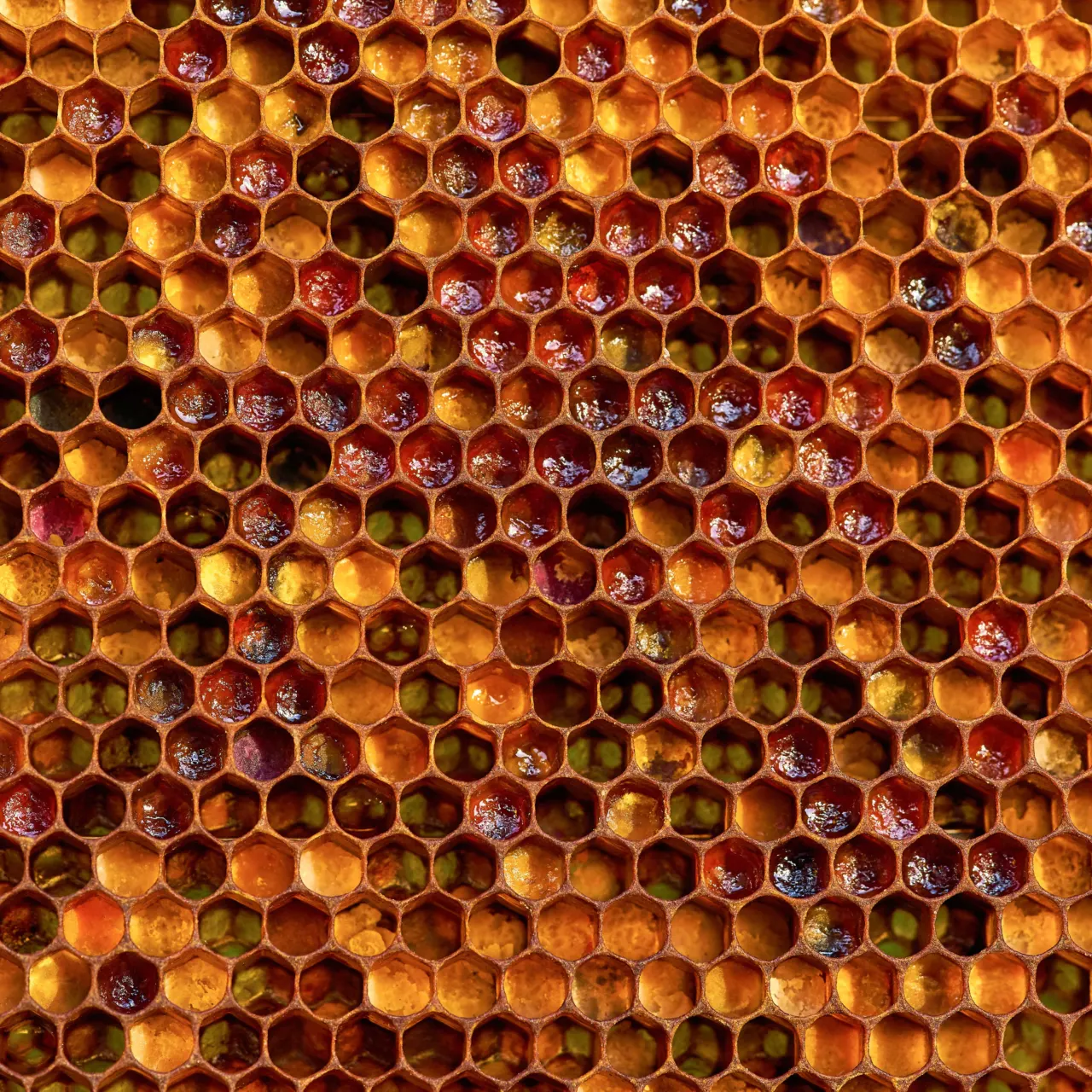
The answer fits in one sentence: bees make honey to build up a food reserve and survive the winter, when the flowers have gone. Honey is their larder: a concentrate of stable energy that does not spoil, stored in the wax cells. Everything about this production (the quantity, the preservation, the organisation) follows from this goal of survival. And it is by producing more than they need that colonies allow the beekeeper to share part of it.
Summary
- Honey is the colony’s food reserve for winter and for periods without flowers.
- A colony needs around 15 to 20 kg of honey to get through the winter, and can produce much more in good years.
- Honey is made to keep: little water, very sugary, acidic; in short, a larder that never spoils.
- The beekeeper takes only the surplus and makes sure enough reserves are left.
- The nectar the bees forage determines the variety: lavender, thyme, chestnut…
Fuel to survive the winter
From late autumn to early spring, there is nothing left to forage. The colony does not migrate and does not truly hibernate: the bees huddle in a “cluster” around the queen and vibrate their muscles to keep the core of the cluster at around 25–30 °C. This constant heating burns an enormous amount of energy, and that energy is the honey stored during the warm months.
Without sufficient reserves, the colony starves in the middle of winter. That is why bees gather with such intensity: a forager will produce about a tenth of a teaspoon of honey in her whole life, and it takes tens of thousands of working lives added together to fill the frames.
Why honey, and not simply nectar?
Fresh nectar contains too much water (70–80%): stored as it is, it would ferment within days. So the bees turn it into a food that keeps:
- they concentrate its sugars (over 80%) by evaporating the water;
- they add enzymes that make it acidic and inhospitable to microbes;
- they seal each full cell with an airtight wax capping.
The result: a food that keeps for years without spoiling. That is why honey practically never goes off, in the hive as in your cupboard. The detailed steps of this fascinating process are explained in how bees make honey.
How much honey does a colony produce?
The orders of magnitude speak for themselves:
- Vital needs for winter: 15 to 20 kg of reserves;
- Possible annual production: 30 to 60 kg or more for a vigorous colony in a good location, depending on the weather and the blooms;
- The beekeeper’s harvest: the surplus only, never the vital reserves.
Bees naturally store more than they need, a safety instinct against lean years. It is this surplus that beekeeping takes, always leaving the colony enough to get through the winter peacefully. Well-run beekeeping is a matter of sharing, not plundering.
Honey varies because flowers vary
Honey reflects exactly what the colony has foraged: hives on the edge of lavender fields = lavender honey; garrigue, the wild Mediterranean scrubland, with its thyme and rosemary = garrigue honey; chestnut groves = chestnut honey; and on the trees, honeydew gives forest honey. Each jar tells the story of a landscape and a season. That is the whole beauty of the terroir honeys we champion in our range from Provence.
A treasure to protect
This age-old mechanism is now under strain: pesticides, varroa mites, Asian hornets, disrupted seasons. Every colony lost is a link in the pollination chain that disappears, an issue that goes far beyond honey, as our articles on the importance of bees for the environment and the challenges to their survival explain.
Frequently asked questions
Why do bees produce honey?
To store food and survive the winter, when flowers are scarce. Honey is their energy reserve, designed to keep for months in the hive.
Do bees suffer when their honey is taken?
Not if beekeeping is well run: colonies produce a surplus beyond their needs, and the beekeeper takes only that surplus, leaving the 15–20 kg of reserves they need to overwinter.
How much honey does a bee produce in her lifetime?
About a tenth of a teaspoon. A 500 g jar represents the combined work of thousands of bees and millions of flowers visited.
Do all bees make honey?
No: it is the speciality of the honey bee (Apis mellifera) and a few close relatives. Most wild bees, which are solitary, do not store honey, but they pollinate our flowers and crops just as much.