
The Valensole Plateau: Lavender, Bees and Honey
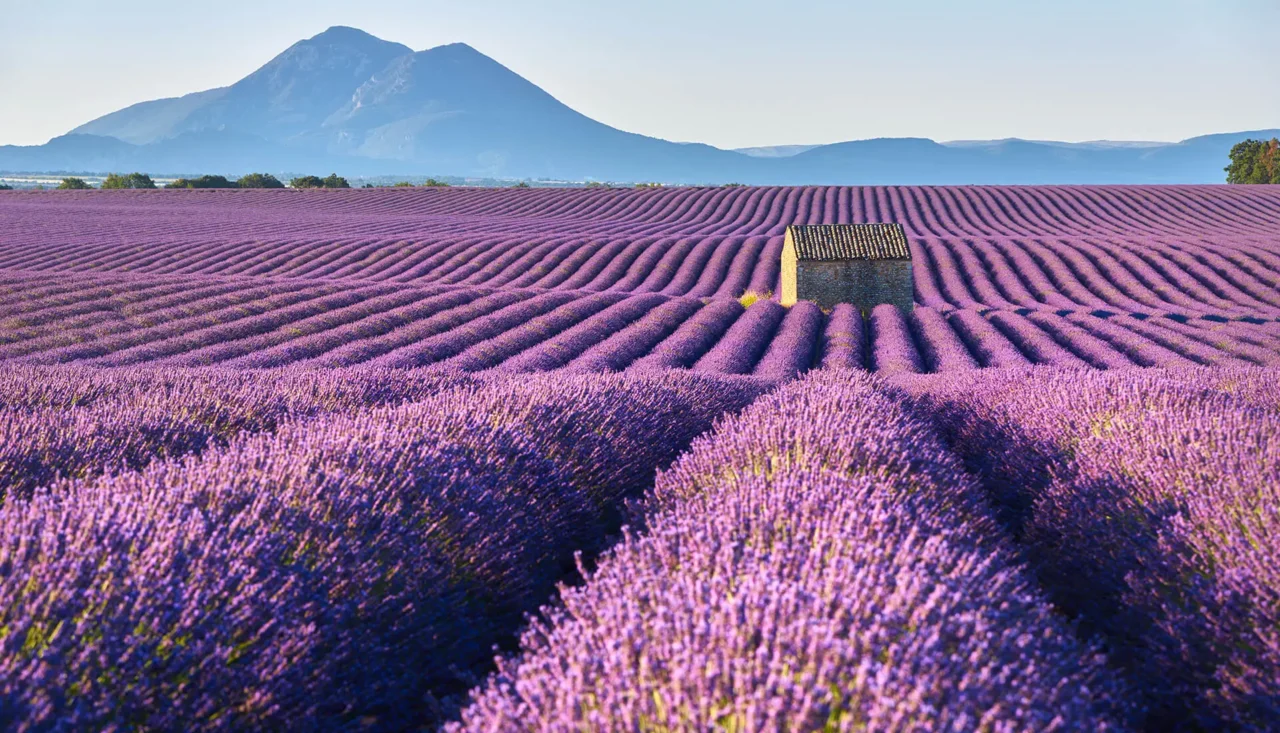
The Valensole plateau, in the Alpes-de-Haute-Provence, is the most famous of Provence’s lavender landscapes: a farming plateau between the Durance and the Verdon, at an altitude of around 500 to 800 m, covered mainly with lavandin. The fields flower from mid-June to mid-July, then are cut in July. During this short flowering period, beekeepers set up their hives there to harvest a pale, floral lavender honey.
Where is the Valensole plateau?
The Valensole plateau occupies the south of the Alpes-de-Haute-Provence. It is bordered by the Durance valley to the west and by the Verdon to the south and east, not far from the Lac de Sainte-Croix and the Gorges du Verdon. Its altitude ranges roughly between 500 and 800 m.
It is a vast, open plateau where fields of lavandin alternate with cereals and almond trees, around villages such as Valensole, Riez and Puimoisson. The climate is dry and bright, with hot summers and cold winters. The stony, well-drained soils suit lavenders, which dislike standing moisture.
Valensole is not the only lavender country. Further west and higher up, the Pays de Sault and the Plateau d’Albion, as well as the Drôme Provençale, form other great terroirs, which we describe on our page devoted to honey terroirs in Provence.
Lavender or lavandin: what do you see at Valensole?
The great purple fields photographed every summer at Valensole are, for the most part, fields of lavandin. Lavandin is a natural hybrid of true lavender and spike lavender. More vigorous and more productive, it is grown mainly for its essential oil, used in perfumery, cosmetics and household products. As it produces very few fertile seeds, it is propagated from cuttings.
True lavender, also called fine lavender, tends to grow at altitude: the Pays de Sault, the Plateau d’Albion, the mountains of Haute-Provence. Its yields are lower and its essential oil, more delicate, is highly sought after. It is also found on the highest margins of the plateau, but it does not dominate there.
| Lavandin | True lavender | |
|---|---|---|
| Plant | Hybrid of true lavender and spike lavender | Lavandula angustifolia, wild or cultivated |
| Where to see it | Large crops on the lower plateaus, including most of the fields at Valensole | Mainly at altitude: Pays de Sault, Plateau d’Albion, Haute-Provence |
| Appearance | Large round clumps, long stems, full flower spikes | Smaller clumps, shorter and slimmer flower spikes |
| Flowering | From mid-June to mid-July at Valensole | Mainly in July, into August at altitude |
| Main use | Essential oil for perfumery and household products | Fine essential oil, perfumery, herbalism |
| For honey | Larger volumes | Rarer harvest |
For the beekeeper, both blooms produce lavender honey. In fact, much of the honey sold under that name comes from fields of lavandin, or from both neighbouring blooms. We explain these differences in our guide to choosing the best lavender honey.
When does lavender flower on the Valensole plateau?
Flowering generally begins around mid-June and continues until mid-July, with a peak often seen around early July. As with all blooms, these dates shift from year to year: a warm spring brings them forward, a cool, wet spring delays them.
The fields are cut in July. Growers harvest the flowering stems by machine and take them to the distillery to extract the essential oil. As July goes on, more and more plots are mown: within a few days the landscape changes from purple to trimmed rows. On the higher plateaus, true lavender takes over and flowers later.
What does this flowering mean for bees and honey?
For many Provençal beekeepers, the lavender bloom is one of the great events of the year. Just before it begins, they move their hives up to the plateaus: this is transhumance. The hives are usually moved at night, when all the bees are back inside, then set up at the edges of the fields.
For a few weeks, the bees forage mainly on lavender and lavandin. The beekeeper harvests the supers at the end of flowering, then the hives come back down or move on to other honey flows, in the mountains for example. This tight schedule explains why lavender honey remains a seasonal honey, whose volume varies greatly with the weather.
Lavender honey is pale, from ivory white to pale yellow. Its scent is floral and fresh, its flavour mild, with an aromatic touch on the finish. It generally crystallises finely, which gives it a creamy, easily spreadable texture. If you are torn between it and a more neutral honey, our comparison acacia honey or lavender honey will help you choose.
The situation of the bees calls for caution. Hotter, drier summers can reduce nectar secretion, and lavender growers are facing the decline of some plantations. The use of plant protection products during flowering is regulated to protect pollinators. Beekeepers and farmers on the plateau thus share a common interest: healthy fields and vigorous colonies.
How can you visit the lavender fields responsibly?
Every summer the plateau’s fields attract many visitors. Yet they are private plots and a working tool. A few simple rules let you enjoy them without disturbing the growers.
- Choose your timing: late June and the first half of July generally offer the fields in fullest bloom. After the cutting, only shorn rows remain.
- Choose the time of day: early in the morning or late in the day, the light is softer, the heat less intense and there are fewer visitors.
- Stay at the edge: do not walk into the rows, do not tread on the plants and do not pick the flowers. A trampled field means a damaged harvest.
- Park considerately: do not block farm tracks or field entrances. In July, harvesting machinery is on the move.
- Respect the bees: there are a great many of them in full bloom. Stay calm, do not approach the hives and take care with children or people with allergies.
- Protect yourself from the sun: the plateau offers little shade. Bring water and a hat.
- Buy locally: distilleries, growers and local markets sell essential oil, bunches of lavender and honey. It is the best way to support those who look after these landscapes.
Does our lavender honey come from Valensole?
Our lavender honey is a lavender honey harvested in Provence by partner beekeepers, during the flowering of the plateaus. We do not present it as a Valensole honey: its precise origin depends on the harvests and on our partners’ apiaries. It is raw, cold-extracted, never pasteurised or blended, and comes in a 300 g jar at €15.
Like all our honeys, it is renewed with each harvest. A difficult year for lavender can therefore make it scarcer. In the jar you will find the clarity, floral mildness and creamy texture that give lavender honeys their character.
Frequently asked questions
When can you see the lavender in bloom on the Valensole plateau?
The fields of the Valensole plateau generally flower from mid-June to mid-July, often peaking in early July. The safest period for a visit runs from late June to mid-July, before the cutting, but the dates vary with the year’s weather.
Are the Valensole fields lavender or lavandin?
Most of the fields on the Valensole plateau are planted with lavandin, a hybrid of true lavender and spike lavender grown for its essential oil. True lavender tends to grow higher up, in the Pays de Sault, on the Plateau d’Albion and in Haute-Provence.
Can you walk into the lavender fields?
Lavender fields are private plots. It is best to stay at the edge, not to walk in the rows, not to pick the flowers and to park without blocking farm tracks. Some growers offer visits or sell bunches on site.
Why do beekeepers bring their hives to Valensole?
The flowering of lavandin and lavender gives bees an abundant resource for a few weeks. Beekeepers move their hives there just before flowering to harvest lavender honey, then take them on to other honey flows once the flowers are over.
What is lavender honey like?
Lavender honey is pale, from ivory white to pale yellow, with a floral scent and a mild flavour. It generally crystallises finely, which gives it a creamy texture. It goes well with tea, yoghurt, fresh cheeses and pastries.