
The Honey Harvest Calendar in Provence, Month by Month
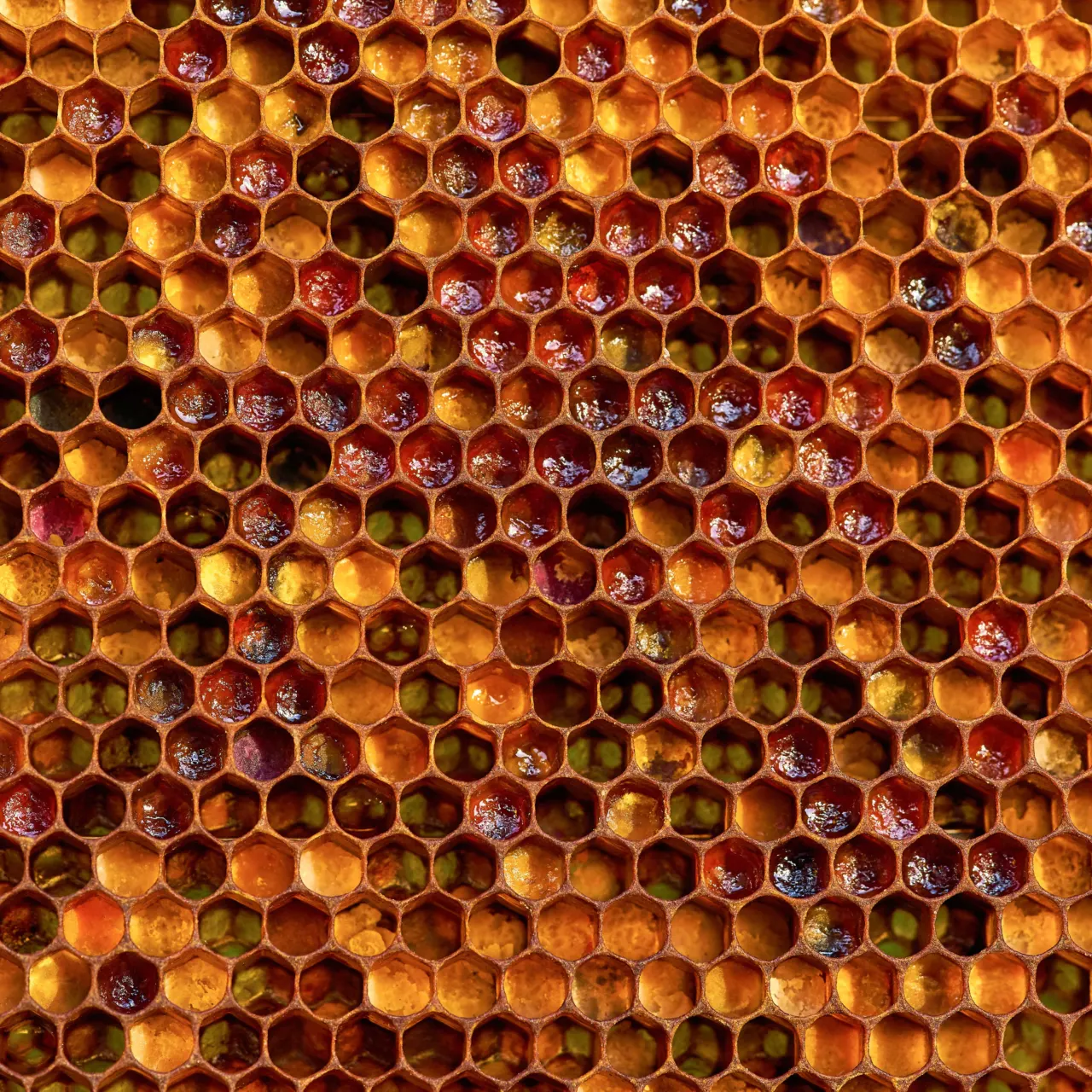
In Provence, honey harvests stretch from spring to autumn. Rosemary and heathers open the season near the coast, thyme and garrigue follow from April to June in the hills, chestnut flowers in June and July in the Maures, lavender from mid-June to early August on the plateaus, then come mountain honeys at the end of summer and forest honeydew, depending on the year. These dates are guidelines: altitude and the year’s weather often shift them by several weeks.
What is a honey flow?
The honey flow is the period during which an abundant resource allows bees to bring back more nectar, or honeydew, than the colony consumes. It is the flow that fills the supers, the boxes placed above the brood box from which the beekeeper takes the honey.
A spectacular bloom does not guarantee a honey flow. The plant must also secrete nectar, which depends on heat, soil moisture and wind. A field of lavender that looks a deep purple can thus prove disappointing for bees in a dry year.
Honeydew is the other major source of honey. It is a sugary liquid excreted by small insects, such as aphids or scale insects, which feed on tree sap. Bees collect it from leaves and needles, notably those of oaks and pines. It produces dark honeys, with an irregular harvest.
To obtain a monofloral honey, the beekeeper puts on the supers at the start of a dominant bloom and removes them at the end, before the bees move on to other flowers. The flowering calendar is therefore at the heart of the beekeeper’s work.
Why does the calendar change with altitude?
In Provence, a few dozen kilometres separate the seashore from the first mountains. Each altitude band flowers in its own time, and the season gradually climbs towards the high ground as spring advances.
- The coast and coastal massifs: flowering starts early, from late winter, with rosemary and heathers. Rosemary honey is one of the first of the year. In the cooler Maures, the chestnut trees flower in June and July.
- The limestone hills: this is the realm of the garrigue, the wild Mediterranean scrubland, with thyme, rosemary, rockroses and many small wild flowers. The main blooms take place from April to June.
- The plateaus from 500 to 1,100 m: Valensole, the Pays de Sault, the Plateau d’Albion. Lavender and lavandin flower there from mid-June to early August, all the later the higher you go.
- The Pre-Alps, above 1,000 m: meadows, woodland edges and undergrowth flower in high summer. Mountain honeys are harvested at the end of the season.
This layering allows beekeepers to follow the blooms by moving their hives: this is transhumance. The same colony can forage on hillside thyme in spring, then on plateau lavender in summer. Each environment has its own character, which we present on our page devoted to honey terroirs in Provence.
Why is no year like the one before?
After altitude, it is the weather that decides.
- Spring rain: a wet winter and spring produce vigorous plants and, often, generous blooms. But prolonged rain during flowering stops the bees from going out.
- Drought: without water in the soil, flowers secrete little nectar, even when they are plain to see. An early drought can cut short the thyme or lavender season.
- The mistral: this strong, dry wind hampers the bees’ flight and dries out the flowers. Several days of mistral in full bloom can significantly reduce a harvest.
- Temperature swings: a late cold spell delays flowering, early heat brings it forward and shortens it.
The dates that follow are therefore typical guidelines, not a schedule. The same honey can be harvested two or three weeks apart from one year to the next, and some, like forest honeydew, can fail completely.
The harvest calendar, month by month
The table summarises, from February to October, the main resources, the honeys concerned and the work in the apiary. From November to January, colonies overwinter on their stores and the beekeeper does little.
| Month | Main blooms and honeydew | Honeys concerned | Work in the apiary |
|---|---|---|---|
| February | Rosemary and almond trees near the coast, first wild flowers | Rosemary (harvest rare this early) | Checking stores by hefting the hives, without opening them for long |
| March | Rosemary, heathers on the coastal massifs, fruit trees | Rosemary, heather | Spring inspections: state of the brood, presence of the queen, stores |
| April | End of rosemary, start of thyme in the hills, garrigue flowers | Rosemary, thyme, garrigue | First supers put on in early areas, watching for swarming |
| May | Thyme, rockroses and garrigue flowers; black locust (acacia) in some valleys | Thyme, garrigue | Putting on supers, swarm prevention, first spring harvests |
| June | End of the garrigue, chestnut in the Maures, start of lavender and lavandin in mid-June | Thyme, garrigue, chestnut | Harvest of spring honeys, transhumance to the lavender fields |
| July | Lavender in full bloom on the plateaus, end of chestnut, high-altitude flora | Lavender, chestnut, mountain | Chestnut harvest, monitoring of the migrated apiaries, access to water |
| August | End of lavender at altitude early in the month, mountain flora, possible honeydew | Lavender, mountain, forest | Lavender harvest, hives brought back down, extraction, varroa control after the last harvest |
| September | Honeydew from oaks and pines in some years, ivy, last mountain flowers | Mountain, forest | Last harvests, extraction, assessment of stores |
| October | Ivy, strawberry tree on the coastal massifs, honeydew in some years | Forest (depending on the year) | Preparing for winter: sufficient stores, reduced entrances, watching for Asian hornets |
The six honeys in our selection follow this calendar. Thyme honey and garrigue honey come from the hills in spring, chestnut honey from early summer, lavender honey from the plateaus in high summer. Mountain honey arrives at the end of the season, and forest honey, made from the honeydew of oaks and pines, depends on the year, most often between summer and autumn.
When do the honeys reach the jar?
Honey is not jarred on the day of the harvest. Once the supers have been removed, the beekeeper uncaps the frames, that is, removes the thin layer of wax that seals the cells, then extracts the honey by centrifugation. The honey is filtered to hold back particles of wax, then left to rest for a few days in a settling tank: air bubbles and the last impurities rise to the surface and are skimmed off. Then comes jarring.
There is therefore always a gap between flowering and the jar. A spring honey can be available from summer, a lavender honey rather from late summer, and mountain and forest honeys in autumn.
Our range is renewed with each harvest. Each year we select six honeys harvested in Provence by partner beekeepers: raw, cold-extracted, never pasteurised or blended. When a season is poor, a honey may be missing or only available in small quantities until the next harvest. Once in the jar, a raw honey also changes: it eventually crystallises, more or less quickly depending on its floral origin.
Frequently asked questions
When is lavender honey harvested in Provence?
Lavender and lavandin flower on the plateaus of Provence from mid-June to early August, later at altitude. Lavender honey is harvested at the end of flowering, most often between July and August, then extracted and jarred after a few days’ rest.
What is a honey flow?
A honey flow is the period during which an abundant bloom or honeydew allows bees to bring back more than they consume. It is during the flow that the supers fill up and the beekeeper can harvest honey without depriving the colony of its stores.
What is the first honey of the year in Provence?
Near the coast, rosemary and heathers flower from late winter and often give the first honeys of the year. These blooms also help the colonies build back up in spring, so the harvest remains modest and depends heavily on the weather.
Why might a honey be unavailable in some years?
A drought, an overly wet spring, a late cold spell or several days of mistral during flowering can greatly reduce a harvest. As each honey comes from a specific bloom, a bad season can make it rare or unavailable until the following year.
Is forest honey harvested every year?
No. Forest honey comes from honeydew produced by small insects on oaks and pines, and its presence varies greatly from year to year. Some seasons give a good harvest, most often between summer and autumn, others almost nothing.