
Rosemary, Thyme and Garrigue Honey: The Honeys of the Provençal Garrigue
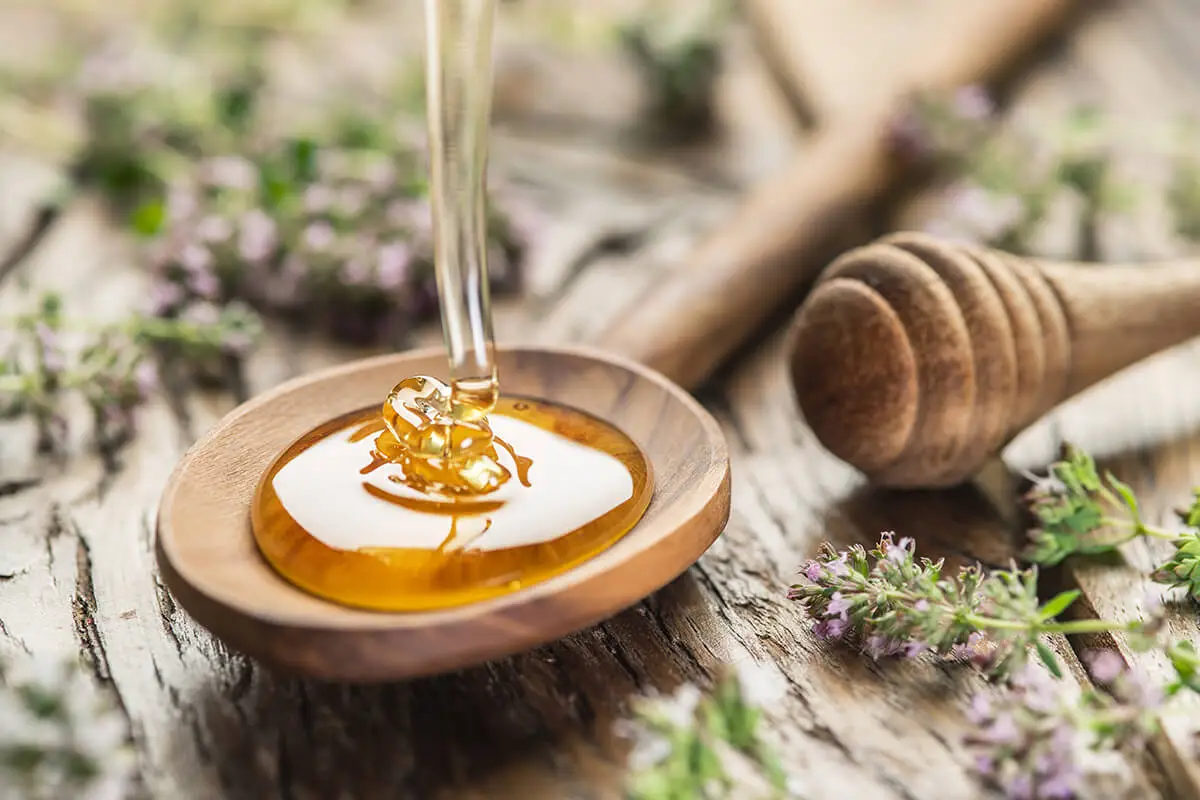
The Provençal garrigue, the wild Mediterranean scrubland of the hills, gives three main types of honey: rosemary honey, very pale and mild; thyme honey, amber and powerful; and garrigue honey, a natural blend of the flowers of these hills, rounded and balanced. They come from the same dry limestone landscapes, but their colour, taste and crystallisation differ markedly. We do not offer pure rosemary honey: we select a thyme honey and a garrigue honey harvested in Provence.
What is the garrigue, and which flowers do bees find there?
The garrigue is a low, sparse vegetation that grows on the limestone soils around the Mediterranean. Summers there are hot and dry, with rain concentrated in spring and autumn. The plants that thrive there are often aromatic: their essential oils help them withstand the heat, and it is they that give the garrigue its characteristic scent.
- Rosemary flowers from late winter into spring, sometimes again in autumn. It is one of the first resources of the year for bees.
- Thyme flowers in spring, from April to June depending on altitude and exposure.
- Winter savory flowers later, at the end of summer and the beginning of autumn.
- Rockroses produce spectacular flowers in spring, but they mainly provide pollen, and little or no nectar.
- Spike lavender, distinct from true lavender and lavandin, flowers in high summer at low altitude.
To place these landscapes among the region’s other terroirs, see our page on honey terroirs in Provence.
What does rosemary honey taste like?
Rosemary honey is one of the palest honeys: almost colourless when liquid, it turns ivory white as it crystallises. Its crystallisation is quick and fine, which often gives it a creamy, easily spreadable texture. Its taste is mild and delicate, lightly floral, with a discreet freshness. It does not really recall the aromatic herb: you will not find in the jar the strength of the rosemary you use in cooking.
It is a honey with a long tradition in the south of France: Narbonne honey, renowned for centuries, was largely a rosemary honey from the garrigues of the Corbières. Today, pure rosemary honey remains uncommon in Provence: rosemary flowers early, at a time of year when the weather is changeable and bee colonies are still building up.
We do not offer pure rosemary honey. If you like pale, mild honeys, lavender honey or garrigue honey are the closest to this profile in our selection.
Rosemary honey: what benefits are attributed to it?
Popular tradition readily associates rosemary with digestion, but these uses concern mainly the plant itself, as an infusion, and not its honey. Like other honeys, rosemary honey can soothe an irritated throat in a hot drink. It is not a remedy: for any health question, ask your doctor.
It remains a sugary food, with about 80 g of sugars and 300 to 330 kcal per 100 g depending on the source. Like all honey, it must never be given to a child under one year old, because of the risk of infant botulism.
Thyme honey, the most powerful honey of the garrigue
Thyme honey is amber, intensely aromatic, with warm, herbaceous notes and a long finish. It is a honey with character, recognisable from the first spoonful, that stands up to goat’s cheeses and herbal infusions alike.
It is also a rare honey. Thyme only yields nectar in quantity if spring has been rainy enough, then mild at flowering time. In dry years, the harvest is small or even non-existent. This rarity explains its higher price: our thyme honey harvested in Provence costs €15 for a 300 g jar. The uses tradition attributes to it are described in our article the benefits of thyme honey.
What is garrigue honey?
Garrigue honey is a polyfloral honey: the bees gather nectar from several hillside flowers, including thyme, rosemary or savory depending on the year. It is a natural blend, made by the bees over the course of the season, and not a mixture of honeys made in the jar.
Its taste is rounded and balanced, milder than thyme honey, with discreet herbaceous notes and good length. Its colour ranges from golden to light amber, and it varies from one harvest to the next, as do its aromas, depending on which flowers dominated. Our garrigue honey costs €13 for a 300 g jar; like our other honeys, it is raw, cold-extracted and never pasteurised.
Rosemary, thyme or garrigue: the comparison table
| Criterion | Rosemary honey | Thyme honey | Garrigue honey |
|---|---|---|---|
| Type | Monofloral | Monofloral | Polyfloral |
| Flowering | Late winter and spring | Spring | Spring and summer, depending on the flowers |
| Colour | Very pale, ivory white once crystallised | Amber | Golden to light amber |
| Taste | Mild, delicate, lightly floral | Powerful, aromatic, long-lasting | Rounded, balanced, herbaceous notes |
| Crystallisation | Quick and fine, creamy texture | Gradual | Gradual, varies with the year |
| Availability | Rare in Provence, not offered by the Miellerie | Favourable years only, €15 for 300 g | €13 for 300 g |
Which garrigue honey should you choose for which use?
- At breakfast, on toast: rosemary honey if you can find it, or garrigue honey for a more aromatic sweetness.
- In a herbal infusion: thyme honey with lemon, garrigue honey in lemon verbena or a light tea.
- With cheese: thyme honey on a fresh or matured goat’s cheese, garrigue honey on brousse (a soft fresh cheese from Provence) or a ewe’s milk cheese.
- In cooking: thyme honey in a marinade for lamb or roast vegetables, garrigue honey in a vinaigrette.
Frequently asked questions
Does Miellerie de Provence sell rosemary honey?
No. We do not offer pure rosemary honey. For a pale, mild honey, we recommend lavender honey or garrigue honey, in which rosemary may be present depending on the year.
Does rosemary honey taste of rosemary?
Not really. Rosemary honey is mild, delicate and lightly floral. It does not capture the aromatic strength of the herb used in cooking.
Why does rosemary honey crystallise so quickly?
It is rich in glucose, the sugar that forms the crystals. It therefore crystallises quickly, in very fine grains, which gives it a creamy texture. This is a natural process, with no effect on its quality.
What is the difference between thyme honey and garrigue honey?
Thyme honey comes mainly from thyme: it is amber, powerful and long-lasting. Garrigue honey brings together several hillside flowers, including thyme: it is rounder and milder.
Why is thyme honey more expensive?
Because its harvest depends on a fairly rainy spring. In dry years, thyme yields little nectar and the harvest is small or even non-existent. This rarity is reflected in its price.