
The 13 Desserts of Provence: List, Origins and Honey Recipes
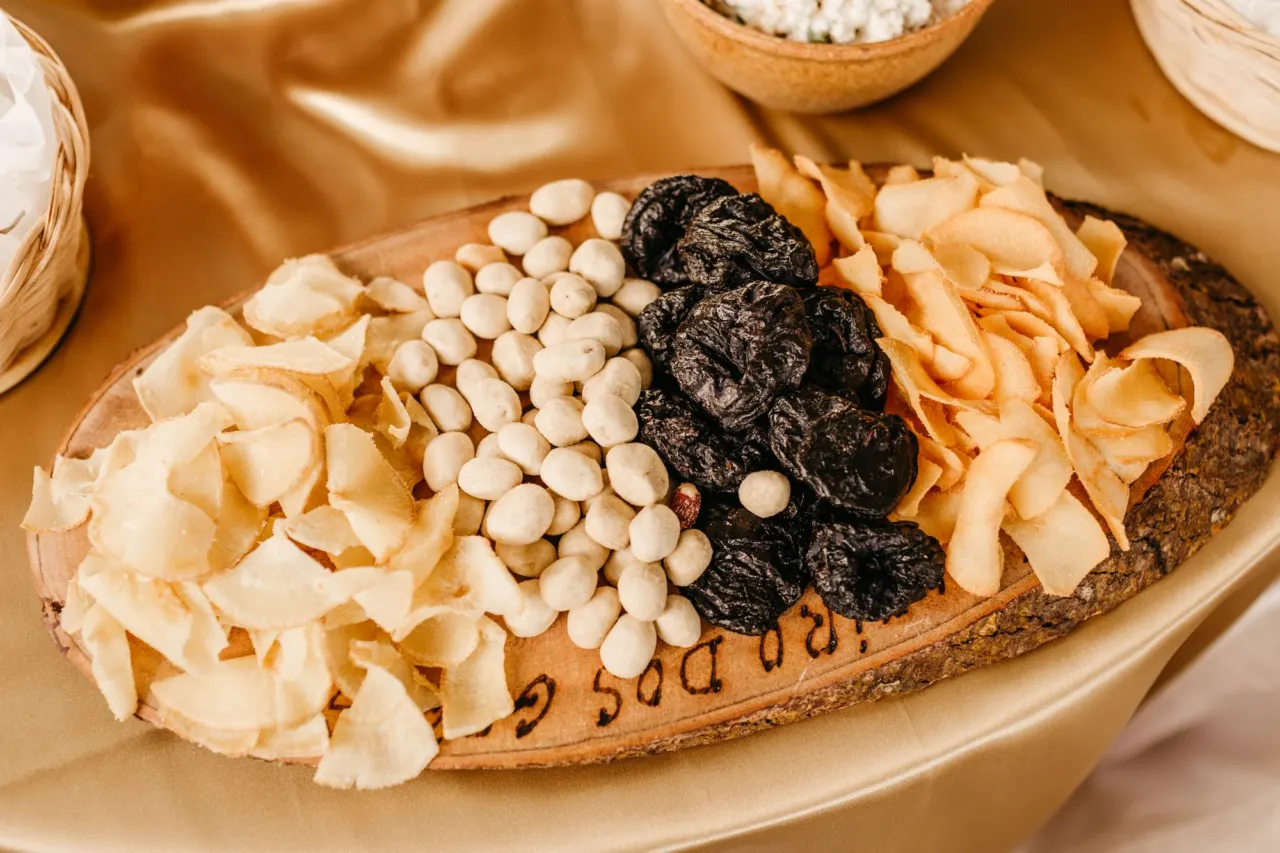
The thirteen desserts are served in Provence on the evening of 24 December, at the end of the gros souper, and traditionally stay on the table until 27 December. They almost always include the four mendiants, black and white nougat, pompe à l’huile, dates and fresh fruit; the rest varies from one town and one family to the next. Their number recalls, according to tradition, Christ and his twelve apostles.
What is the gros souper of 24 December?
The gros souper, lou gros soupa in Provençal, is the Christmas Eve supper, served before midnight mass. Despite its name, which means the big supper, it is a meatless meal, in keeping with the Church’s old rule for Christmas Eve. It is “big” for its abundance and its importance in the year, not for its richness.
According to tradition, the table is laid with three white tablecloths, one on top of the other, and three candlesticks. On it go the small dishes of Saint Barbara’s wheat, sown on 4 December: if it has sprouted well, the year will be a good one. The dishes, often seven in number, vary with each family and what it can afford: salt cod, snails, cardoons, spinach, celery, cauliflower, anchoïade or grey mullet, served with bread and vin cuit, a sweet cooked wine.
Then come the thirteen desserts. Depending on the household, they are served at the end of the supper or on returning from midnight mass. They are not cleared away: tradition has it that they stay on the table for three days, until 27 December, so that everyone can come back to them.
What are the 13 desserts?
There is no official list. A common core appears almost everywhere, then each family adds its own, depending on its town, its habits and what the autumn has brought. Here are the desserts most often mentioned.
| Dessert | What it is | How often it appears |
|---|---|---|
| Dried figs | First of the four mendiants | Almost always |
| Almonds | Second mendiant | Almost always |
| Raisins | Third mendiant | Almost always |
| Walnuts or hazelnuts | Fourth mendiant | Almost always |
| Black nougat | Honey and almonds caramelised together | Almost always |
| White nougat | Honey, whisked egg whites and almonds | Almost always |
| Pompe à l’huile | Flat olive oil brioche, scented with orange blossom | Almost always |
| Dates | Fruit from the East | Very often |
| Fresh fruit | Oranges, mandarins, winter pears, fresh grapes, green winter melon | Very often |
| Quince paste | Confection of quinces cooked with sugar | Depending on the family |
| Calissons | Almond paste and candied melon, a speciality of Aix-en-Provence | Depending on the family |
| Candied fruit | A speciality of Apt | Depending on the family |
| Croquants, oreillettes, navettes | Crisp almond biscuits, thin fritters, orange blossom biscuits | Depending on the town |
Some families count each fresh fruit separately, others group the mendiants together: the total sometimes reaches fourteen or fifteen desserts, and nobody minds. What matters is abundance and sharing.
Where does the tradition of the 13 desserts come from?
Plentiful desserts on Christmas Eve are an old custom in Provence, but their number was not fixed. The figure of thirteen became established during the 20th century, championed by writers and associations devoted to Provençal traditions, before spreading across the whole region.
The number is full of meaning: it refers to the thirteen people at the Last Supper, Christ and his twelve apostles. The four mendiants, for their part, recall the mendicant religious orders through the colour of their habits: dried figs for the Franciscans, almonds for the Carmelites, raisins for the Dominicans and walnuts or hazelnuts for the Augustinians. The attributions vary slightly from one source to another, but the idea remains the same.
Custom also has it that you taste each of the desserts to ensure a prosperous year. It is a way of remembering that, in the depths of winter, the Christmas table brought together the best of what the land had given.
What does each dessert stand for?
The four mendiants. Figs, almonds, raisins and walnuts are fruits that kept easily through the winter. They are often served together in the same bowl, and they also give their name to small chocolate discs topped with dried fruit and nuts, likewise called mendiants.
Black nougat and white nougat. Black nougat is made only of honey and almonds, cooked until caramelised; white nougat is made with egg whites, honey and a sugar syrup. They are presented side by side, and a widespread interpretation sees in them good and evil, or the white and black penitents of the Provençal brotherhoods. You can make both at home: our recipe for Provençal black nougat and the one for white honey nougat.
Pompe à l’huile. Also called gibassier or fougasse depending on the area, it is a flat olive oil brioche, scented with orange blossom and sometimes aniseed. Custom has it that you break it by hand, as Christ broke bread, rather than cutting it with a knife, or else, so the saying goes, you will be ruined within the year.
Fresh fruit. Oranges, long a luxury, are among the oldest. To them are added mandarins, winter pears, fresh grapes kept since the grape harvest and, in some families, green winter melon, stored somewhere cool until Christmas.
Dates. A fruit from the East, they evoke the land where Christ was born and the Three Wise Men.
Local confections. The calisson of Aix-en-Provence combines almond paste and candied melon under a thin layer of royal icing, on a base of wafer paper. Quince paste is made in the autumn, and candied fruit traditionally comes from Apt. Almond croquants, oreillettes, light fried pastries, and orange blossom navettes complete the table depending on the town.
Where does honey fit into the 13 desserts?
Honey is at the heart of both nougats. In black nougat, it is the only binder: its flavour comes through whole in the caramel. Lavender honey makes a rounded, floral nougat, garrigue honey a more fragrant one, and chestnut honey a dark, almost bitter version. In white nougat, lavender honey remains the reference choice for its pale colour and mildness.
Honey also goes into some almond croquants, and sometimes into desserts that families add to the list. Honey gingerbread is not part of the strict Provençal tradition, but it often finds its way onto end-of-year tables, and it can be made several days ahead.
Finally, a good honey set on the table, with a few walnuts and a piece of pompe à l’huile, remains a simple way to linger over the meal.
How can you prepare the 13 desserts without wearing yourself out?
Organisation is everything. Most of the desserts keep well, which means the work can be spread over several weeks.
- In November: quince paste, to be made while quinces are in season; it keeps for several weeks.
- Early December: black and white nougat, which keep for three to four weeks in an airtight container, and croquants, which stay crisp in a metal tin.
- On 4 December: sow Saint Barbara’s wheat in three small dishes of damp cotton wool.
- Christmas week: buy the fresh fruit, dates, calissons and candied fruit, and prepare the four mendiants.
- On 24 December: the pompe à l’huile, best made on the day, and laying the table.
If you are hosting, there is nothing to stop you sharing out the desserts among your guests: each brings their own speciality, and the table is all the more Provençal for it.
Homemade nougat is also a chance to taste different honeys harvested in Provence. Miellerie de Provence selects six honeys each year from partner beekeepers, all raw, cold-extracted and never pasteurised. The lavender, thyme and garrigue discovery box (€39) brings three of them together, enough to compare two nougats and keep a jar for the table. For more festive ideas, see our selection of Christmas food gifts.
Frequently asked questions
What are the 13 desserts of Provence?
There is no official list. They almost always include the four mendiants (dried figs, almonds, raisins, walnuts or hazelnuts), black nougat, white nougat, pompe à l’huile, dates and fresh fruit; quince paste, calissons, candied fruit, croquants or oreillettes complete the table depending on the family and the town.
Why are there 13 desserts at Christmas in Provence?
According to tradition, the number thirteen recalls Christ and his twelve apostles gathered at the Last Supper. The figure became fixed during the 20th century; before that, Christmas desserts were plentiful but their number varied.
When are the 13 desserts eaten?
On the evening of 24 December, at the end of the gros souper or on returning from midnight mass, depending on the family. Tradition has it that they then stay on the table for three days, until 27 December.
Do you have to taste every dessert?
According to custom, yes: tasting each of the thirteen desserts is said to bring luck for the year ahead. A small mouthful of each is enough.