
Why Is Protecting Bees Crucial for the Environment?
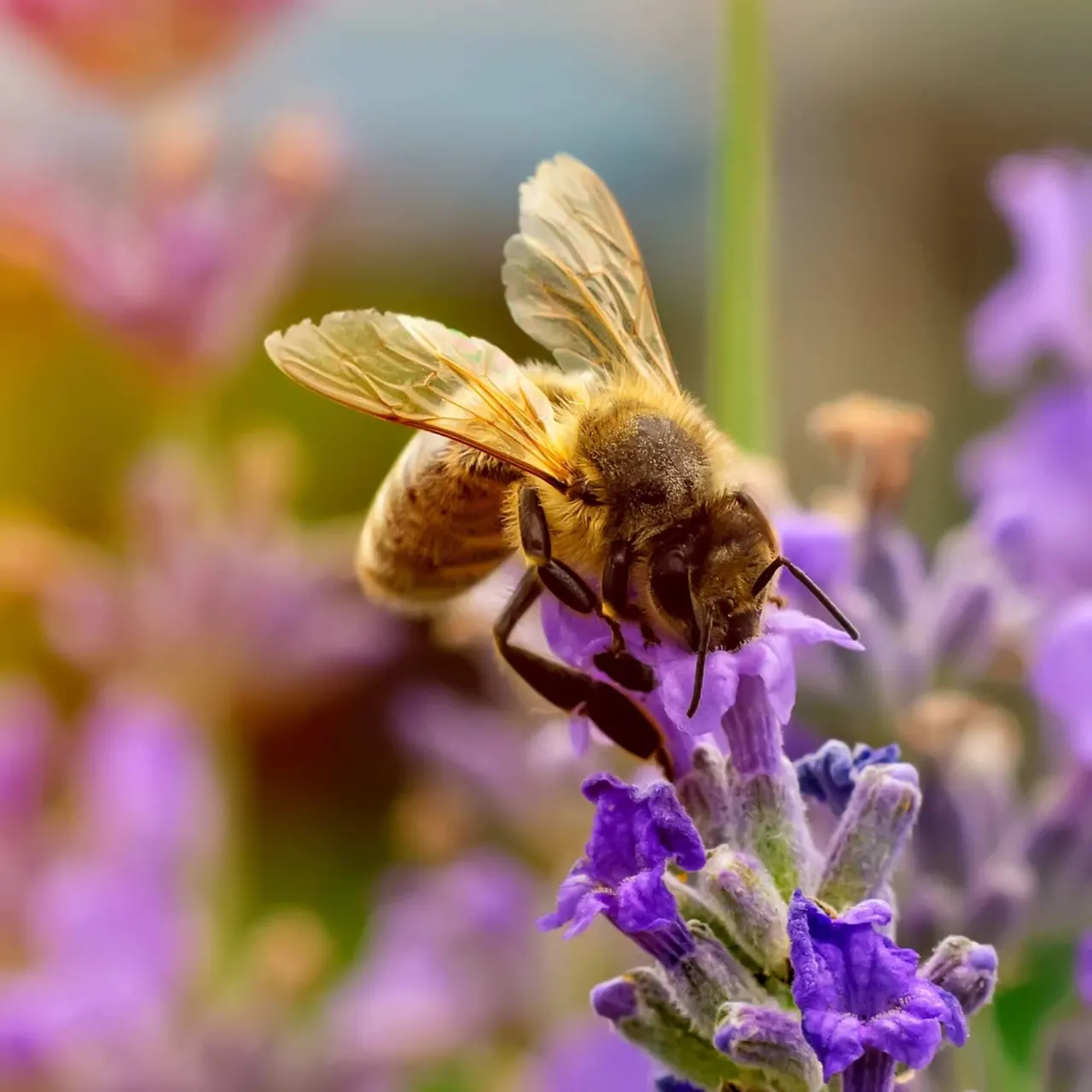
One mouthful of food in three depends directly on pollinators. Behind this figure lies a simple reality: without bees, there is no pollination; without pollination, a large part of our food and of wild flora disappears. Protecting bees is not a sentimental cause. It is a question of food security and ecological balance. Here is why, and above all how each of us can take practical action, at our own scale.
Summary
- Around 75% of the world’s food crops depend at least in part on pollinators.
- Bees (honeybees and wild bees) also ensure the reproduction of most wild flowering plants.
- Main threats: pesticides, habitat loss, varroa, the Asian hornet, climate change.
- Their decline sets off a domino effect throughout the food chain.
- A pesticide-free garden, nectar-rich flowers, local honey: three levers within everyone’s reach.
Pollination: the most underrated ecological service
As it flies from flower to flower to collect nectar and pollen, the bee unwittingly carries pollen from one flower to the next, allowing them to be fertilised. This discreet service underpins:
- our food: fruit, vegetables, oilseeds, almonds… According to IPBES (2016), around 75% of the world’s food crop types depend at least partly on pollinators. Self-pollinating crops (wheat, rice) can do without them, but most of the diversity and vitamins on our plates cannot;
- wild flora: nearly 90% of wild flowering plants need pollinators to reproduce;
- the whole web of life: these plants feed insects, birds and mammals. Fewer bees = fewer flowers = fewer seeds and fruits = fewer birds. The domino effect is well documented.
The global economic value of pollination is estimated at several hundred billion euros a year, a “free service” that nothing can replace on a large scale.

What is killing bees: the 5 threats
- Pesticides, neonicotinoids above all: they disorient foragers, weaken colonies and contaminate stored pollen;
- Habitat loss: monocultures, urbanisation and intensive mowing remove wild flowers and nesting sites;
- Varroa: this parasitic mite weakens colonies and transmits viruses, the daily battle of every beekeeper;
- The Asian hornet: since arriving in France in 2004, it has been decimating foragers at hive entrances;
- Climate change: shifting flowering times, droughts that dry up nectar (the thyme and lavender honey flows in Provence depend on it directly), erratic winters.
The result: winter colony losses that regularly reach 20 to 30% in France, and a massive, silent decline in wild bees, less visible than honeybees but just as essential. We look at these issues in detail in challenges and opportunities for the survival of bees.
Taking action: what really works
In your garden or on your balcony
- Zero pesticides: measure number one, no question;
- Plant for bees: lavender, thyme, rosemary, sage, borage, sunflowers, spread across the seasons to provide food from spring to autumn;
- Leave a wild corner: long grass, hollow stems, dead wood, the habitat of solitary bees;
- A shallow dish of water with a few stones poking above the surface, invaluable in summer.
In what you buy
- Buy local, artisan honey: you directly fund the upkeep of colonies that pollinate your region. That is what our work, and our honeys harvested in Provence, is all about;
- Choose products from less intensive farming, which preserves habitats;
- Report Asian hornet nests to your local authority rather than dealing with them yourself.

What we do at our own scale
We do not produce honey: every year, we select the harvests of partner beekeepers based in areas of wild Provençal flora (garrigue, plateaux, hills). We favour practices that leave colonies their winter reserves and respect their natural rhythm (why this matters: why bees make honey). Every jar you buy directly supports this beekeeping work in Provence.
Frequently asked questions
Why are bees so important for the environment?
Because they contribute to the pollination of around 75% of food crops and 90% of wild flowering plants: the entire food chain, human and animal, depends in part on their work.
What would happen if bees disappeared?
Collapsing yields for many fruits and vegetables, a dramatic impoverishment of wild flora, and a domino effect on birds and wildlife. Some crops would survive (self-pollinating cereals), but our diet would be poorer and far more expensive.
What are the main threats to bees?
Pesticides, habitat loss, varroa, the Asian hornet and climate change. They often act together, and it is their combined effect that makes the decline so rapid.
How can I help bees at my own scale?
Ban pesticides, plant nectar-rich flowers that bloom throughout the year, leave wild spaces, provide water and buy your honey directly from local beekeepers.