
Propolis: benefits, uses, forms and precautions
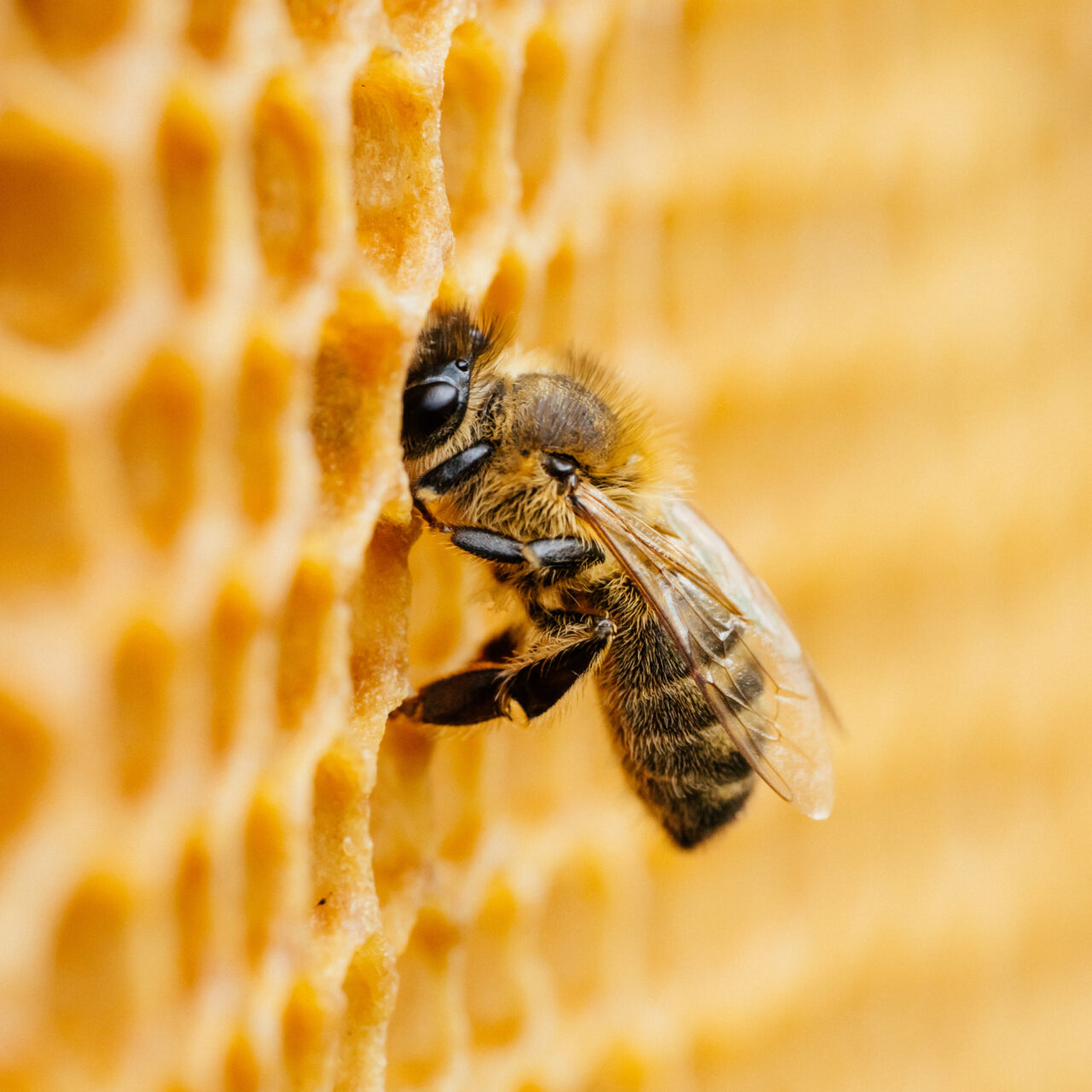
Propolis is a resin that honeybees gather from the buds and bark of certain trees, then mix with wax to seal and protect their hive. Collected in small quantities by beekeepers, it is sold raw, as a tincture, as a spray or in chewable gums, and it is traditionally used in winter. Studied in the laboratory for its compounds, it is not a medicine and calls for caution, especially if you are allergic to bee products.
What is propolis?
The word comes from Greek: pro, “in front of”, and polis, “the city”. Propolis is literally what stands in front of the city, at the entrance to the hive, which bees narrow with it as winter approaches.
Unlike beeswax or royal jelly, it is not something the bee secretes. It is plant material: foragers collect the resins and balms that certain trees produce to protect their buds and wounds, notably poplars, birches, conifers and chestnuts. Back at the hive, they mix them with wax and their own secretions.
The result is a substance that is sticky in warm weather and hard and brittle in the cold, with a resinous, balsamic scent. Its colour ranges from yellow to an almost black brown, and red or green propolis is found in some parts of the world, depending on the trees visited. In Europe, the most common kind is known as “poplar-type” propolis.
Its composition varies with the local flora, but these orders of magnitude are often quoted for raw propolis from temperate regions: about half resins and balms, rich in phenolic compounds, about 30% wax, around ten per cent essential oils and aromatic compounds, and a few per cent pollen and other substances.
What is propolis used for in the hive?
Bees use it as a building and maintenance material:
- Sealing: they fill cracks and gaps in the hive, which keeps out draughts and damp.
- Narrowing the entrance: in autumn, they reduce the entrance hole to defend the colony more easily and keep in the warmth.
- Varnishing the cells: a thin layer of propolis lines the inside of the cells before the queen lays in them.
- Isolating intruders: a small dead animal too heavy to be carried out, such as a mouse, is covered in propolis, so that it does not decompose in the open air of the hive.
Propolis thus contributes to the cleanliness and stability of the hive, a warm, humid space where tens of thousands of bees live in summer. It is this role that first caught researchers’ interest. To understand colony life better, read our article why bees make honey.
How is propolis harvested?
A colony produces only a small amount of propolis: from a few dozen to a few hundred grams a year, depending on the source, the local flora and the bees. Some colonies use far more propolis than others.
The traditional method is scraping. During inspections, the beekeeper uses a hive tool to scrape off the propolis deposited on the frames and walls. This propolis often contains bits of wood, wax or bees, and has to be sorted.
The cleanest method uses a propolis screen: a perforated sheet laid over the tops of the frames. Bees dislike light and draughts, so they fill the slots with propolis. The beekeeper removes the screen and puts it in the freezer; the propolis turns brittle and breaks away when the screen is flexed. It is then purified and sold raw or made into an extract.
What forms does propolis come in?
Raw propolis dissolves poorly in water. To use it, it is most often extracted in alcohol, which gives the tincture on which many products are based.
| Form | Description | Traditional use | Worth knowing |
|---|---|---|---|
| Raw | Purified pieces or nuggets | Chewed slowly, in small amounts | Strong taste, sticks to the teeth |
| Tincture | Propolis macerated in alcohol (hydroalcoholic extract) | A few drops in water, a herbal tea or on a spoonful of honey | Contains alcohol: not for children or during pregnancy |
| Alcohol-free extract | Extracted in water or glycerine | Same uses as the tincture | Chosen to avoid alcohol; check the concentration |
| Spray | Diluted extract, often with honey or essential oils | Sprayed into the mouth or throat in winter | Ingredient list can be long |
| Gums and lozenges | Propolis combined with honey or sugar | Sucked or chewed | Propolis content sometimes low |
| Capsules and powder | Dry extract, sold as a food supplement | Taken for a few weeks | Stick to the dose stated by the manufacturer |
Propolis is also found in toiletries and cosmetics: toothpastes, lip balms, creams. One practical tip: propolis stains skin, teeth and fabric. The stains come out with alcohol, not water.
What are the benefits attributed to propolis?
Propolis has been used since antiquity. The Egyptians are said to have used it in embalming preparations, and writers such as Aristotle and Pliny the Elder already described it. For a long time it was part of folk medicine in Europe, particularly in Eastern Europe, where bee products remain very much part of everyday life.
Today, propolis is mostly associated with winter. It is sold in pharmacies and health food shops as throat sprays and lozenges, and many households keep a bottle to hand through the cold months. It is traditionally taken from the start of autumn, on its own or added to a hot drink of honey and lemon.
Propolis is also the subject of many laboratory studies. Researchers are interested in its phenolic compounds: flavonoids such as pinocembrin, galangin and chrysin, and caffeic acid phenethyl ester, often shortened to CAPE. This work, mostly carried out in vitro or on animals, describes interesting properties, but it is not enough to establish any effect on human health.
Remember this: propolis is not a medicine. In the European Union, a product may not claim an effect on health without a claim authorised after assessment by EFSA, the European Food Safety Authority. A lingering symptom, a fever or pain calls for a doctor’s advice.
Propolis: what precautions should you take?
Propolis is a known allergen, particularly on contact with the skin and mucous membranes. A few rules apply:
- Allergies: avoid it if you are allergic to bee products (honey, pollen, wax, royal jelly), to balsam of Peru or to poplar buds, as cross-allergies have been reported. People with asthma should seek medical advice first.
- Tolerance test: start with a very small amount. If you feel tingling, develop mouth ulcers or notice swelling in your mouth, stop at once.
- Children: ask your paediatrician or pharmacist. Alcohol-based tinctures are not suitable for them, and honey-based products must never be given before the age of one, because of the risk of infant botulism.
- Pregnancy and breastfeeding: data are insufficient; ask your doctor and avoid alcohol-based forms.
- Current treatment: if you take any medication or have surgery planned, talk to your doctor or pharmacist.
How to choose propolis
A few pointers help you compare products:
- Origin: the country and type of propolis (poplar-type in Europe, green or red from Brazil and so on). Each origin has its own composition.
- Concentration: for an extract, the proportion of propolis and, ideally, a guaranteed polyphenol or flavonoid content. “With propolis” and no figure tells you very little.
- Solvent: alcohol (and its strength), water or glycerine, depending on your needs.
- Ingredients: a short, readable list. Sprays and gums often add sugar, flavourings and essential oils.
- Labelling: a food supplement must state a recommended daily portion along with warnings; in France, supplements are also notified to the DGCCRF, the consumer protection authority.
To store propolis, keep it away from light, heat and moisture, in a tightly closed container. Raw propolis keeps for a long time; a tincture keeps well in a closed bottle, until the date shown.
Propolis and honey: what is the difference?
Honey and propolis come from the same hive, but they have almost nothing in common. Honey is a food, made from flower nectar or the honeydew of trees, and composed mainly of sugars. Propolis is a resin, not pleasant to eat on its own, used in tiny amounts. The table below sets out the main hive products.
| Product | Origin | Role in the hive | How it is eaten or used |
|---|---|---|---|
| Honey | Flower nectar or tree honeydew | Energy store | By the spoonful, on toast, in cooking |
| Pollen | Flower stamens | Protein store for the brood | A few grams a day, fresh or dried |
| Propolis | Resins from buds and bark | Sealing and protection | A few drops of extract, sprays, gums |
| Beeswax | Secreted by young worker bees | Building the comb | In honeycomb, in cosmetics |
| Royal jelly | Secreted by nurse bees | Food for the queen and young larvae | In very small amounts, kept cold |
Honey and propolis nonetheless go well together. Traditionally, a few drops of tincture are placed on a spoonful of honey, which softens their bitterness, or added to a hot lemon, ginger and honey drink. Thyme honey, amber and powerful, is a winter honey: it is traditionally enjoyed in a herbal tea to soften a scratchy throat. Forest honey, made from the honeydew of oaks and pines, shares with propolis its woodland origins and woody notes.
The French honeys we select from partner beekeepers in Provence are raw, cold-extracted and never pasteurised, as explained on our page about raw, unpasteurised honey. And to learn all about the bees’ other great harvest, read our guide to bee pollen.
Frequently asked questions
What are the benefits of propolis?
Propolis has been prized since antiquity and is still traditionally used in winter, notably as a throat spray or in lozenges. It is studied in the laboratory for its phenolic compounds, but this work does not, to date, allow any effect on human health to be attributed to it.
How do you take propolis?
Traditionally, a few drops of tincture in a glass of water, a herbal tea or on a spoonful of honey, or a spray, for a few days to a few weeks. Always stick to the dose stated by the manufacturer and start with a small amount.
Who should not take propolis?
People allergic to bee products, balsam of Peru or poplar buds should avoid it. People with asthma, children, and pregnant or breastfeeding women should ask a doctor first and avoid alcohol-based forms.
What is the difference between green and brown propolis?
The colour depends on the plants the bees visit. Brown or amber propolis, the most common in Europe, comes mainly from poplars. Green propolis, well known in Brazil, comes from a local shrub, Baccharis dracunculifolia, and has a different composition.
Does honey contain propolis?
Raw honey may contain tiny traces of it, far too little to call it propolis honey. Products combining the two are blends in which propolis is added as an extract.
Does propolis go off?
Raw propolis is very stable and keeps for a long time if stored dry and away from light. Extracts and sprays carry a date to respect; once opened, keep them tightly closed and away from heat.