
White Honey: Why Some Honeys Are White, and How to Choose Them
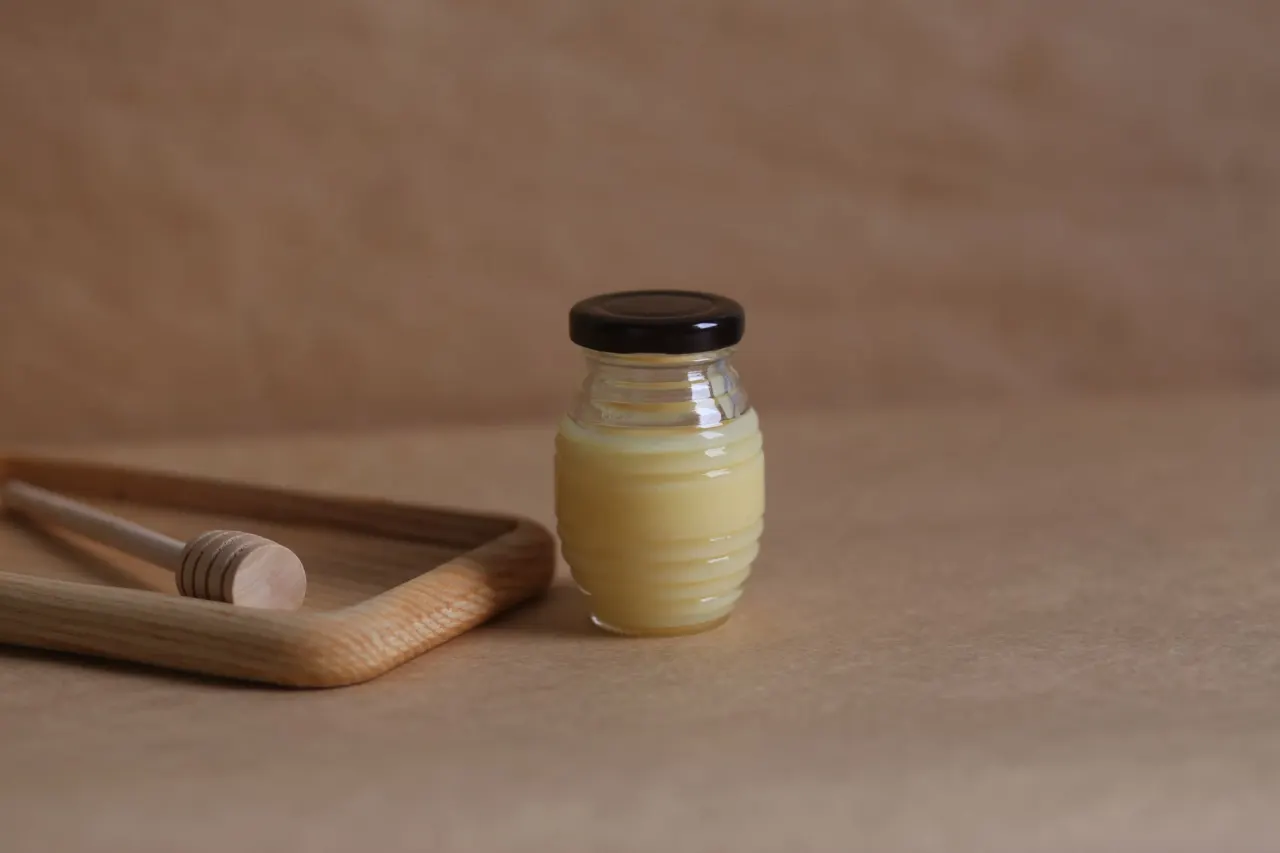
A white honey is almost always a honey that has crystallised into very fine grains: the glucose crystals scatter light and give the honey its ivory to white colour and its creamy texture. The honeys that turn whitest are pale, glucose-rich honeys such as rapeseed, clover, sainfoin and lavender. Nothing is added to a white honey: its colour comes from the flowers the bees visited and the way it crystallised.
Why are some honeys white?
At harvest, almost all honeys are runny. Their colour then ranges from almost colourless to very dark brown, depending on the flowers or honeydew the bees gathered: pigments, minerals and phenolic compounds colour a chestnut or forest honey far more than a rapeseed or acacia honey.
Over time, most honeys crystallise. Honey is a highly concentrated solution of two main sugars, fructose and glucose. Glucose, which is less soluble, gradually forms crystals. And a crystallised honey always looks paler than the same honey in liquid form: the crystals scatter light instead of letting it through, rather as snow looks white while ice is transparent.
The finer and more numerous the crystals, the whiter, smoother and more opaque the honey. Large, sparse crystals, on the other hand, give a grainy, beige or golden honey. Three factors matter most:
- The ratio of glucose to fructose: the more glucose a honey contains relative to fructose, the faster it crystallises, and fast crystallisation generally gives fine grains. Rapeseed honey, very rich in glucose, can set in a few days; acacia honey, rich in fructose, stays runny for months or even years.
- Water content: for the same composition, a drier honey generally crystallises faster and firmer.
- Temperature: crystallisation is fastest at around 14 °C; it slows down in both cold and warm conditions.
We explain this process in detail, and how to make a honey runny again without damaging it, in our article on crystallised honey.
Which honeys are white?
The honeys that turn whitest are pale in liquid form, rich in glucose and quick to crystallise. Here are the main ones, with guidelines that vary with the harvest and storage.
| Honey | Liquid colour | Crystallised colour | Crystallisation | Flavour |
|---|---|---|---|---|
| Rapeseed | Almost colourless to very pale yellow | Pure white | Very fast, sometimes within a few days | Very mild, discreet, sometimes a slight vegetal note |
| Clover | Very pale | White | Fast | Mild, delicate |
| Sainfoin | Very pale | White to ivory | Fast, fine grains | Mild, floral |
| Lavender | Pale ivory to pale gold | Ivory to creamy white | Fairly fast, very fine grains | Floral, fragrant |
| Sunflower | Bright yellow | Pale yellow to butter yellow | Fast | Mild, fruity, slightly tangy |
| Acacia, for comparison | Almost colourless | Usually stays runny | Very slow | Very mild, slightly vanilla |
Sunflower honey shows that white and pale are not the same thing: it crystallises quickly but keeps a yellow tint. Acacia honey, by contrast, is one of the palest honeys, yet it stays transparent because it crystallises very slowly; we compare it with lavender in our article acacia honey or lavender honey. Dark honeys, such as chestnut or forest honeydew honeys, stay runny for a long time and never turn white.
Texture does not tell you the colour either: manuka honey, thick and almost creamy, remains a creamy brown. You may also come across “white honeys” online presented as rare, often from Central Asia and made from sainfoin: these are pale, finely crystallised honeys whose origin should be checked on the label, as with any other honey.
White honey, creamy honey, creamed honey: what is the difference?
A honey can turn white on its own, over time. A creamy honey, or creamed honey, is a honey whose crystallisation the beekeeper has guided to obtain a smooth texture that spreads like soft butter.
- Stirring: when the honey begins to crystallise, it is stirred regularly for a few days, by hand or in a settling tank fitted with a mixer. Stirring breaks up the crystals as they form and keeps them very fine.
- Seeding: a small proportion, often around 10%, of a very finely crystallised honey can also be mixed into the liquid honey. These crystals act as a starter, and the whole batch crystallises on their model. The method was developed in the United States in the 1930s.
- Cool conditions: the cream forms best in a cool room, at around 14 °C, where crystallisation is fastest.
Stirring also incorporates tiny air bubbles that lighten the honey further: this is why a creamed honey often looks whiter than the same honey left to crystallise on its own. In industry, honey is sometimes heated before seeding to dissolve any crystals already present; a creamed honey may therefore be raw or not, and only the label or the producer can tell you.
In every case, creamed honey is still honey, and nothing but honey. European regulations (Directive 2001/110/EC), transposed in France by the decree of 30 June 2003, forbid adding any ingredient whatsoever to honey. A product containing sugar, butter, flavourings or fruit is a honey-based preparation, which cannot be called simply “honey” and must display its list of ingredients.
Is white honey a quality honey?
Colour says nothing about a honey’s quality. A white honey is neither purer, nor adulterated, nor poorer than any other. Crystallisation is a normal process that affects neither the flavour nor the keeping qualities of honey. It is not, however, proof of authenticity on its own: a well-crystallised honey may also have been heated beforehand.
Nutritionally, white and runny honey are equivalent: about 300 to 330 kcal and 80 g of sugars per 100 g, according to the Ciqual table published by ANSES, the French food safety agency. Pale honeys are simply a little lower in minerals and phenolic compounds than dark ones. To choose a white honey well:
- Read the floral origin: rapeseed, clover, lavender, sainfoin… It tells you what flavour and colour to expect. “Wildflower”, on the other hand, says nothing about colour.
- Check the country of harvest: it must appear on the label, and for a blend of honeys, all the countries of origin must now be listed.
- Look for the word “creamed”: it indicates guided crystallisation, not an additive. If a list of ingredients appears on the jar, it should mention honey only.
- Be wary of promises: a white honey sold at a high price as “rare” or “exceptional” is still a pale crystallised honey, to be judged on its origin and its flavour.
Our guidelines for recognising a quality honey also apply to white honeys.
How should you store white or creamed honey?
A creamed honey keeps like any honey, but its texture needs a little care.
- Cool, not cold: a room at a moderate temperature, roughly 15 to 20 °C, suits it. The fridge makes it harder, without harming it.
- Away from heat: near a heat source or in full sun, some of the crystals melt and the honey separates into two layers. Stirring it restores an even texture, though slightly less fine than before.
- Tightly closed: honey absorbs moisture from the air. A honey that is too moist can ferment; a liquid layer on top, bubbles and a sour smell are the signs.
- With a clean, dry spoon: for the same reason, avoid introducing water or crumbs.
The white streaks that sometimes appear on the sides of the jar, like frost, come from tiny air pockets that form as the honey contracts while crystallising. They are harmless. Stored well, honey keeps for a very long time, as we explain in our article does honey go off? And if you prefer your honey runny, the article on crystallised honey explains how to liquefy it gently.
And among the honeys we select?
Of the six honeys we select each year from partner beekeepers, lavender honey (€15 for a 300 g jar) is the one that comes closest to a white honey. Runny and pale gold at harvest, it crystallises naturally into very fine grains and turns ivory, with a creamy, spreadable texture. Depending on when you open the jar, you will find it still runny or already creamy: it is the same honey. Chestnut and forest honeys, on the other hand, stay dark and runny for a long time. All are harvested in Provence, raw, cold-extracted, never pasteurised and never blended, with nothing added: each one crystallises at its own pace.
Frequently asked questions
Is white honey a natural honey?
Yes. A white honey is a honey crystallised into very fine grains, most often from flowers such as rapeseed, clover, sainfoin or lavender. Regulations forbid adding anything to honey: its colour comes solely from its composition and its crystallisation.
Why has my honey turned white?
Because it has crystallised. The glucose it contains has formed fine crystals that scatter light and make the honey paler. It is a natural process that changes neither its quality nor how long it keeps.
What is the difference between white honey and creamed honey?
A white honey may have crystallised on its own, over time. A creamed honey has been stirred while crystallising, sometimes after a little already-crystallised honey has been added, to obtain very fine crystals and a smooth texture. In both cases, it contains nothing but honey.
Is white honey less sweet than runny honey?
No. Crystallised or runny, honey contains about 80 g of sugars per 100 g. Only the form of the glucose changes: dissolved in runny honey, as crystals in white honey.
Can you give white honey to a child?
Not before one year old, like any honey, because of the risk of infant botulism. After one year, its creamy texture, which does not drip off bread, makes it practical for children, in small amounts.