
The Benefits of Forest Honey: the Treasure of Honeydew
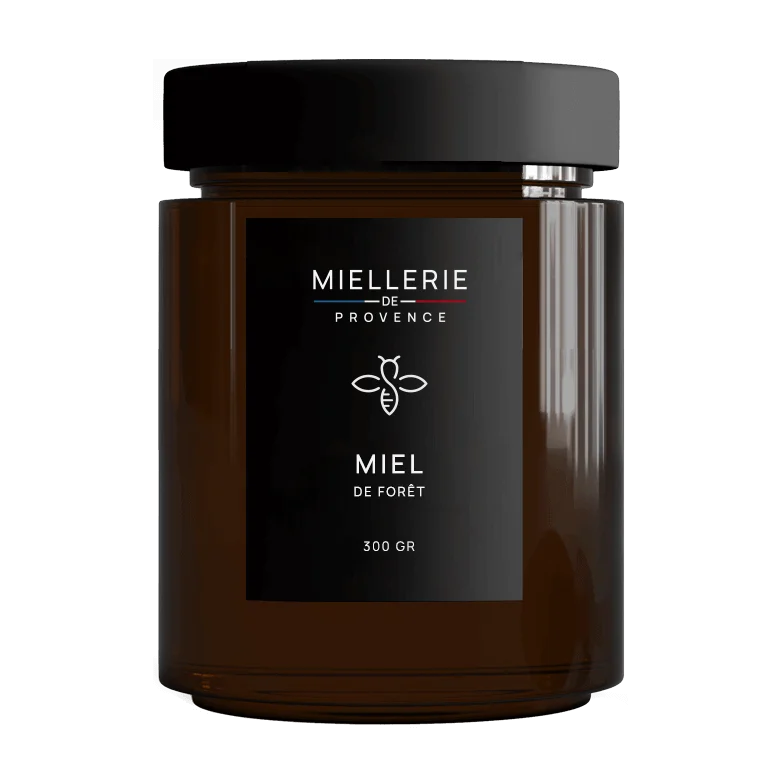
Less famous than lavender or thyme, forest honey is nonetheless one of the most complete honeys there is. Its secret: it does not come (only) from flowers, but from the honeydew of trees, a raw material naturally concentrated in minerals. The result is a dark, deep honey, less sweet on the palate and remarkably dense in nutrients. Here are its benefits, and why it deserves to be better known.
The benefits of forest honey at a glance
- One of the honeys richest in minerals: potassium, iron, magnesium
- A high content of antioxidants, typical of dark honeys
- A traditional tonic for winter and for times of fatigue
- A woody, malty taste, less sweet than blossom honeys
- A friend to the throat in seasonal herbal teas
What exactly is forest honey?
Forest honey is mostly a honeydew honey: the bees collect not flower nectar but the sugary exudates found on trees (oaks, firs, broadleaf trees), produced from their sap. Complemented by nectar from bramble and woodland flowers, this “tree nectar” is transformed by the bees exactly like a floral nectar.
This origin changes everything: tree sap is richer in minerals and complex compounds than flower nectar, and honeydew honey inherits this density. This is why forest and fir honeys are so prized in Germany, Switzerland and Eastern Europe, where they are regarded as “health” honeys.
The main benefits of forest honey
1. An exceptional mineral density
Potassium, iron (honeydew honeys are among the best sources in the world of beekeeping), magnesium, zinc: in terms of minerals, forest honey outclasses almost all blossom honeys. It is the ideal sweetener for times of fatigue and for athletes, far more interesting than white sugar, as we explain in why replace refined sugar with natural honey.
2. Plenty of antioxidants
Its dark brown colour with green glints signals a high concentration of polyphenols, compounds that help protect cells against oxidative stress. The golden rule of honey: the darker it is, the richer it is.
3. The traditional winter tonic
In mountain regions and in Central Europe, forest honey is the winter honey par excellence: in a warm herbal tea with lemon, it soothes the throat and helps you through chills. For a lingering cough, our guide which honey for a cough? will help you choose the right honey for the right symptom.
4. Less sweet on the palate, easier to digest
Forest honey contains less glucose and more complex sugars (notably melezitose) than blossom honeys: it tastes less sweet and suits those who find the very sweet taste of pale honeys off-putting. Its glycaemic index is also more moderate.
5. Support for your immunity
The antibacterial properties of honey, plenty of trace elements and antioxidants: forest honey ticks every box of a natural tonic for the cold season, alongside characterful honeys such as garrigue. Our article on honey and immunity details the right habits for winter.
How to enjoy forest honey
- At breakfast: on toast, porridge or granola, where its malty notes work wonders;
- In a warm herbal tea (never boiling) with a dash of lemon, in the evening;
- In cooking: pain d’épices, marinades, glazed carrots or squash, mature cheeses (ideas in our honey recipes);
- In a yoghurt for an instant dessert with a woody caramel taste.
The usual precautions: never before 12 months, and in moderation if you have diabetes.
Where can you find a good forest honey?
Genuine forest honey is an irregular harvest (honeydew depends on the trees, the weather and even the aphid populations), which makes it all the more precious. Choose a honey with a precise origin, raw and unpasteurised, from a producer or an artisan honey house. Our artisan forest honey is harvested in Provence and jarred without heating. Discover all our honeys too.
Frequently asked questions
What are the benefits of forest honey?
Very rich in minerals (potassium, iron, magnesium) and antioxidants, it is traditionally used as a winter tonic and to soothe the throat. Its nutritional density exceeds that of most blossom honeys.
What is the difference between forest honey and blossom honey?
Forest honey comes mainly from honeydew (a sugary substance derived from tree sap), blossom honeys from nectar. Honeydew gives a darker, more mineral honey that tastes less sweet.
Is forest honey good for anaemia?
It is one of the honeys richest in iron, which makes it a pleasant supplement, but the amounts remain those of a sweetening food: if you have been diagnosed with anaemia, only suitable treatment prescribed by a doctor is effective.
Forest honey or mountain honey?
Mountain honey is a polyfloral honey from high-altitude flowers, more aromatic and floral; forest honey, made from honeydew, is woodier, maltier and more mineral. Two complementary profiles, and keen honey lovers keep both in the cupboard.