
Honey in Winter: What It Can Do, and What It Can’t
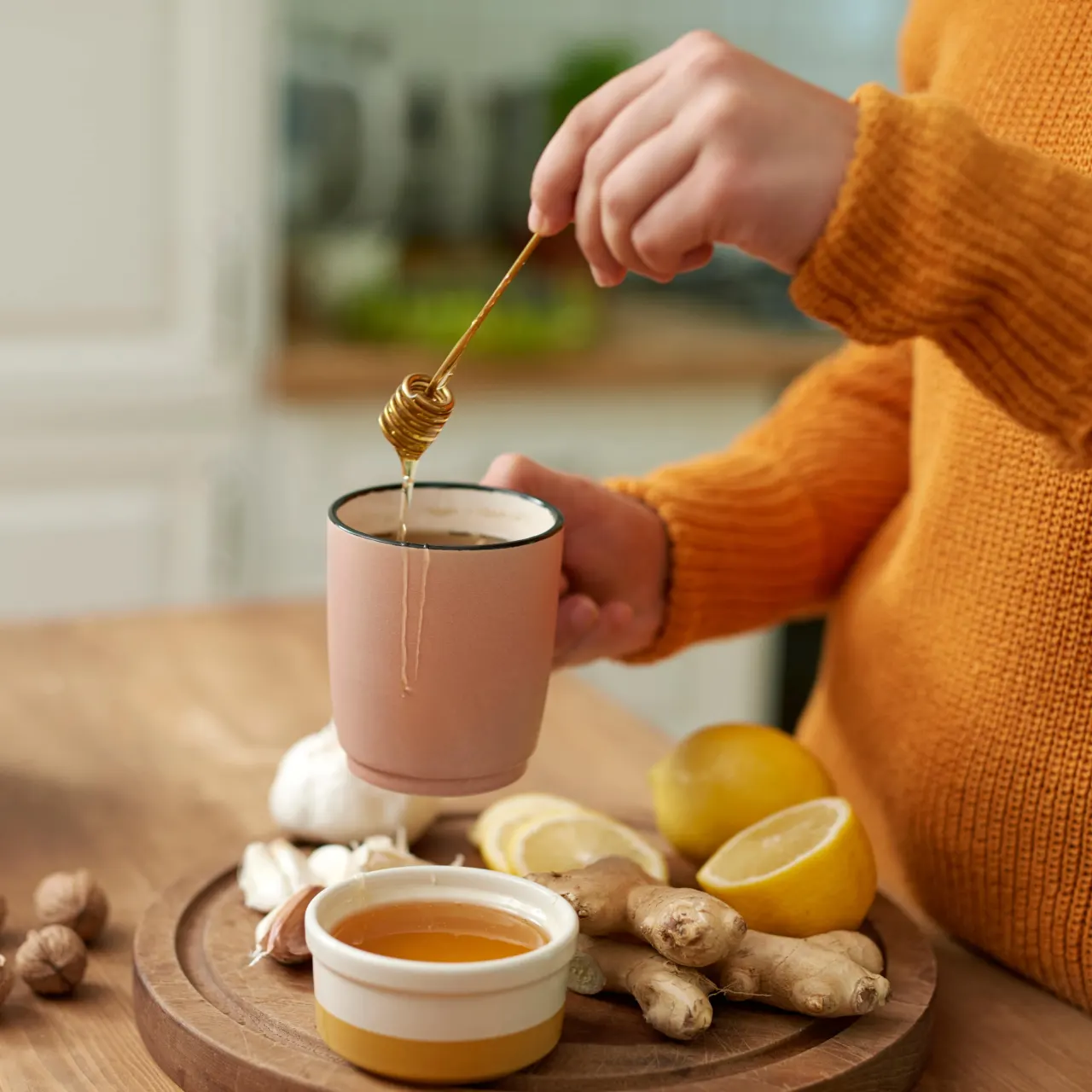
A spoonful of honey every morning to get through the winter: our grandmothers’ habit is not without foundation. Raw honey provides enzymes, antioxidants and a softening effect on the throat, welcome assets when the cold sets in. Provided you choose the right honey, and use it correctly. Here is what honey can really do for your defences this winter, without crediting it with magical powers.
Summary
- Raw honey contains enzymes, including glucose oxidase, which releases small amounts of hydrogen peroxide.
- It contains antioxidants (polyphenols), in greater quantities in dark honeys.
- It is traditionally used to soothe the throat and can ease coughing.
- The winter honeys: thyme first, then garrigue, forest and mountain.
- A pasteurised honey loses most of these qualities: choose it raw.
What honey really provides for the body
Honey is not a medicine, but its composition explains its reputation:
- Enzymes: bees enrich the nectar with glucose oxidase, an enzyme that releases small amounts of hydrogen peroxide, which is behind an antibacterial activity observed in the laboratory;
- Antioxidants: polyphenols and flavonoids, more abundant in amber and dark honeys;
- Minerals and trace elements: potassium, magnesium, zinc, iron depending on the variety, in small quantities admittedly, but absent from white sugar;
- Quickly available energy: fructose and glucose, which the body absorbs directly.
An important point: these compounds are fragile. Pasteurisation destroys a large part of them. That is why we only select cold-extracted honeys that have never been pasteurised: all our honeys follow this rule.
Honey and irritated throats in winter
This is its most common use: by coating the throat, honey can soothe irritation and the urge to cough. In the UK, NICE guidelines (2019) list it among the possible supplementary remedies for an acute cough, from the age of one. If the cough persists, see your doctor. Take a teaspoon left to melt in the mouth, or stirred into a warm herbal tea, several times a day. To choose the right jar for your symptoms (dry cough, chesty cough, sore throat), follow our complete guide: which honey for a cough?
Which honeys are best for winter?
All honeys share the same basics (enzymes, sugars, a softening effect), but some have a real winter bonus:
- Thyme honey: the great classic. It is the honey traditionally associated with throats and winter chills (its benefits in detail here);
- Garrigue honey: thyme, rosemary and savory from the wild Mediterranean scrubland, brought together in a single jar, a Provençal classic of the cold season;
- Forest honey: the most mineral-rich (potassium, iron), traditionally recommended in times of fatigue;
- Mountain honey: a high-altitude polyfloral honey, rich and balanced, perfect for every day.
A simple rule of thumb: amber to dark honeys are generally richer in antioxidants than very pale ones.
A few winter rituals
- The morning spoonful: a teaspoon of raw honey, on its own or on toast;
- Thyme, lemon and honey tea: infuse the thyme for 5–10 minutes, let it cool slightly, then add honey and lemon. Never in boiling water (above 40 °C, the enzymes are destroyed);
- The alcohol-free toddy: hot water left to cool slightly, honey, lemon, freshly grated ginger;
- Evening milk (or plant-based drink) with honey: the classic bedtime drink when the throat feels scratchy.
Precautions to know
- Never give honey before 12 months: risk of infant botulism, without exception;
- Diabetes: honey is still a sugar, so medical advice is needed;
- Honey is a companion, not a cure: a fever that lasts, symptoms that get worse → see a doctor.
And remember: immunity is built first and foremost on sleep, a varied diet and physical activity. Honey is a tasty teammate, not a shield.
Frequently asked questions
Can honey really strengthen your immunity?
No health claim relating to immunity is authorised for honey in Europe. It contains antioxidants, enzymes and minerals in small quantities, and it is traditionally used to soothe the throat. It goes hand in hand with a healthy lifestyle, but replaces neither vaccines nor medical advice.
What is the best honey for winter?
Thyme honey, traditionally associated with throats and winter chills. Garrigue, forest and mountain honeys complete the line-up of cold-season honeys.
How should you enjoy honey in winter?
One to two teaspoons a day, on their own or in a warm (never boiling) drink. Little and often is better than a lot at once.
Pasteurised or raw honey?
Raw, without hesitation: pasteurisation destroys the enzymes and some of the antioxidants. Look for the words “unpasteurised” or “cold-extracted”.