
3 Homemade Honey Face Masks for Winter
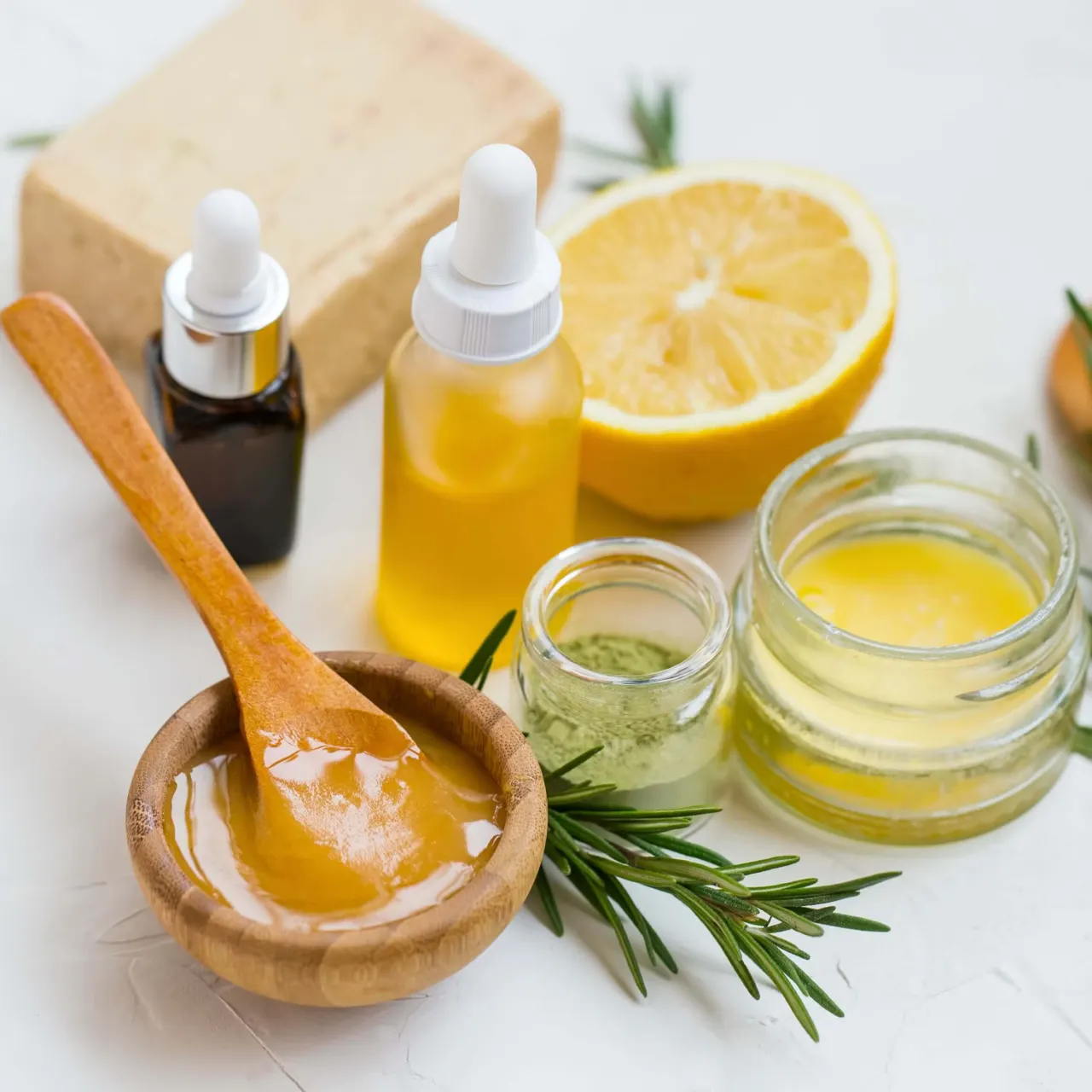
Cold outside, heating inside: winter puts skin to the test (tightness, redness, a dull complexion). The good news: the best skincare treatment of the season may well be in your kitchen. A homemade honey mask moisturises, nourishes and soothes in 15 minutes, for the price of a spoonful. Here are our 3 favourite recipes, one for each need: moisturising, nourishing, soothing.
The secret of its effectiveness: a raw, unpasteurised honey. Its active enzymes do all the work. A heated, industrial honey is nothing but a sticky sugar. Why is honey so good for the skin? Find out more in honey’s secrets for radiant skin.
Before you start: the 3 rules
- Patch test: a drop of the mixture in the crook of your elbow 24 hours before the first use;
- Clean, slightly damp skin before applying;
- 15 to 20 minutes on the skin, rinse with lukewarm water, 1 to 2 masks a week at most.
Mask no. 1, moisturising: honey and avocado (dry, tight skin)
Avocado brings its lipids and vitamins A and E, and honey attracts and holds water: the perfect pairing for skin dried out by the cold.
- ½ very ripe avocado, mashed into a smooth purée;
- 1 tablespoon of raw honey; lavender honey, which is soothing, is ideal here;
- Optional: 1 teaspoon of olive oil for very dry skin.
Mix until you have a smooth cream, apply a generous layer, leave on for 15–20 minutes, then rinse with lukewarm water. Your skin feels softer straight away.
Mask no. 2, nourishing: honey and banana (dull, tired skin)
Banana, rich in B vitamins and potassium, revitalises; honey helps it penetrate and brightens. The radiance-boosting mask for the morning after a late night.
- ½ very ripe banana, mashed with a fork;
- 1 tablespoon of raw honey; a mountain honey, rich in minerals, works well here;
- Optional: a few drops of lemon juice for radiance (not if your skin is reactive).
Apply, leave on for 15 minutes, rinse. Your complexion is visibly revived from the very first use.
Mask no. 3, soothing: honey and oats (sensitive skin and redness)
Colloidal oatmeal is the benchmark skin soother (it is the active ingredient in care products for atopic skin); combined with honey, it calms redness caused by the cold.
- 2 tablespoons of oat flakes ground to a fine powder (in a blender);
- 1 tablespoon of raw honey;
- 2 to 3 tablespoons of lukewarm water or milk, to form a soft paste.
Apply with a very gentle massage (the oats exfoliate lightly as you go), leave on for 15 minutes, then rinse with lukewarm water. Your skin is calmed and its texture refined.
Which honey for your homemade masks?
- Sensitive, dry, irritated skin: lavender honey, the long-standing soother of Provençal cosmetics;
- Combination skin, prone to blemishes: thyme honey, the most antiseptic;
- All skin types: mountain honey, balanced and rich in trace elements.
Whatever you choose: raw, unpasteurised, with a known origin, like all our honeys harvested in Provence. One jar serves both your breakfast toast and your Sunday-evening mask: the best-value treat in your bathroom.
Mistakes to avoid
- Hot water for rinsing: it brings the redness back. Lukewarm, always;
- Leaving it on too long: after 20 minutes, the mask dries out and draws moisture back out of the skin;
- Harsh ingredients in winter (neat lemon, cinnamon) on sensitive skin;
- A pasteurised honey: without enzymes, the only effect is stickiness.
Frequently asked questions
How do you make a honey face mask?
The simplest way: a teaspoon of raw honey in a thin layer on clean, damp skin, left on for 15–20 minutes, then rinsed off with lukewarm water. Add avocado (moisturising), banana (radiance) or oats (soothing) depending on your needs.
How many times a week should you use a honey mask?
Once or twice a week. Regularity over the season matters more than frequency.
Is a honey mask suitable for all skin types?
Yes, including sensitive skin (in that case, choose the oat recipe and lavender honey). Always do a patch test 24 hours before the first application.
Which honey is best for a homemade mask?
A raw, unpasteurised honey, with its enzymes intact: lavender to soothe, thyme to purify, mountain for everything.