Fluffy Honey Pancakes
Fluffy pancakes made with lavender honey, sweetened with honey in the batter and drizzled with more to serve, with yoghurt and red berries. About twelve pancakes for 4 people.
- Preparation15 min
- Cooking20 min
- Resting15 min
- Serves4
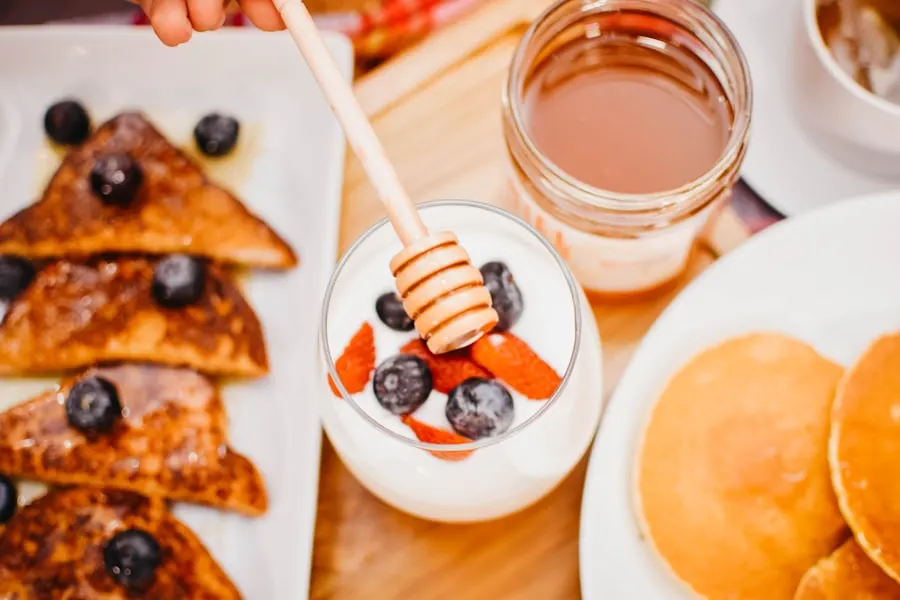
Fluffy honey pancakes come from a thick batter, raised with baking powder, sweetened with honey rather than sugar, then rested for a quarter of an hour before cooking over a medium heat. Lavender honey flavours the batter and is drizzled over the pancakes to serve, with yoghurt and red berries. Allow about twelve pancakes for 4 people.
Method
- Mix the dry ingredients In a mixing bowl, combine the flour, baking powder and salt.
- Whisk the wet ingredients In a second bowl, whisk the eggs with the lavender honey and vanilla extract, then add the milk and the lukewarm melted butter. Whisk until the honey has fully dissolved.
- Combine the two mixtures Pour the liquid mixture over the flour and whisk just enough so that no dry flour remains. A few lumps are not a problem: an overworked batter gives firmer pancakes.
- Rest the batter Leave the batter to rest for 15 minutes at room temperature. It thickens and starts to form small bubbles.
- Pour in the batter Heat the frying pan over a medium heat and grease it very lightly with butter using kitchen paper. Pour in a small ladle of batter (about 5 cl) per pancake, without spreading it.
- Cook and flip Cook for 1½ to 2 minutes, until bubbles appear on the surface and the edges look dry, then flip the pancake and cook for about 1 minute more. Honey colours quickly: lower the heat if the underside is browning too much.
- Keep warm Keep the pancakes warm under a clean tea towel, or in the oven at 90 °C, while you cook the rest of the batter.
- Serve in stacks Serve the pancakes in stacks, with the yoghurt, the red berries and a drizzle of honey poured at the last moment.
Which honey should you choose?
Lavender honey harvested in Provence gives the pancakes a delicate floral fragrance that goes very well with red berries and yoghurt. For a rounder, mellower taste, mountain honey is an excellent alternative, both in the batter and to serve. Cooking softens some of the aromas: it is the drizzle of honey poured over the hot pancakes that brings the most fragrance. If your honey has crystallised, warm the jar for a few minutes in a water bath, without going above 40 °C; our article on honey crystallisation explains why.
Tips and variations
- For a successful pancake recipe, three rules are enough: do not overmix the batter, let it rest, and cook over a medium rather than a high heat.
- For even lighter pancakes, separate the eggs, whisk the whites to soft peaks and gently fold them into the batter just before cooking.
- Replace 10 cl of the milk with 10 cl of natural yoghurt, loosened with a little stirring: the batter will be slightly thicker and the pancakes more tender.
- In winter, serve them with pears or apples pan-fried in butter and a drizzle of mountain honey.
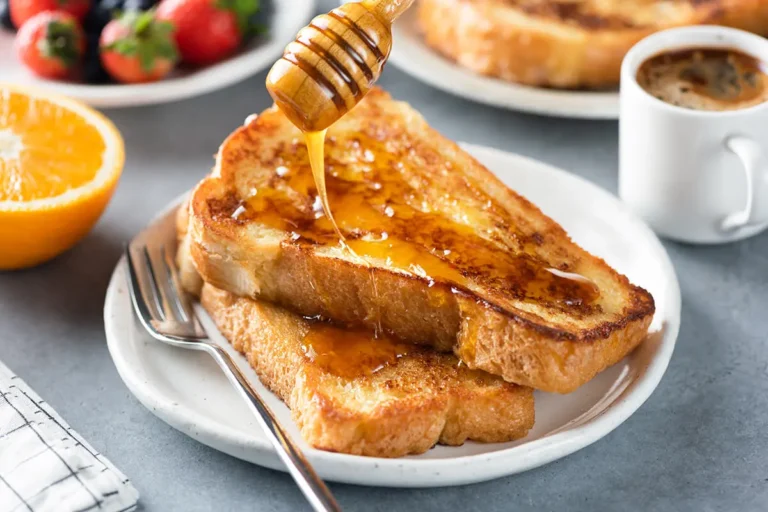
- For a heartier breakfast, alternate with our honey French toast.
Storage
Pancakes are best eaten freshly cooked. They keep for one to two days in the fridge, in an airtight container, and can be reheated for a few seconds in a frying pan or toaster. They also freeze very well, separated by sheets of baking paper. The raw batter, however, loses some of its rise: make it on the day. Find more ideas in our honey recipes.
Frequently asked questions
Why aren’t my pancakes fluffy?
Most often, the batter was overmixed or the pan was too hot. Mix just enough to incorporate the flour, rest the batter for 15 minutes and cook over a medium heat so that the centre has time to rise.
Can you replace sugar with honey in pancakes?
Yes. Two tablespoons of honey are enough to lightly sweeten the batter. Honey colours faster than sugar during cooking: keep an eye on the heat and lower it if necessary.
How many pancakes should you allow per person?
Allow three pancakes about 12 cm across per person for breakfast, with the yoghurt and fruit. This recipe makes about twelve.
Can you serve these honey pancakes to young children?
Yes, from the age of one. Honey must never be given to a child under one year old, because of the risk of infant botulism, even when it is cooked into a dish.
Cook next