Honey recipeDesserts & teatime
Honey Madeleines
Lavender honey madeleines made with melted or browned butter, with a proud hump thanks to a chilled batter and a very hot oven. Makes around twenty madeleines.
- Preparation20 min
- Cooking20 min
- Resting1 h minimum (ideally overnight)
- Makes20 madeleines
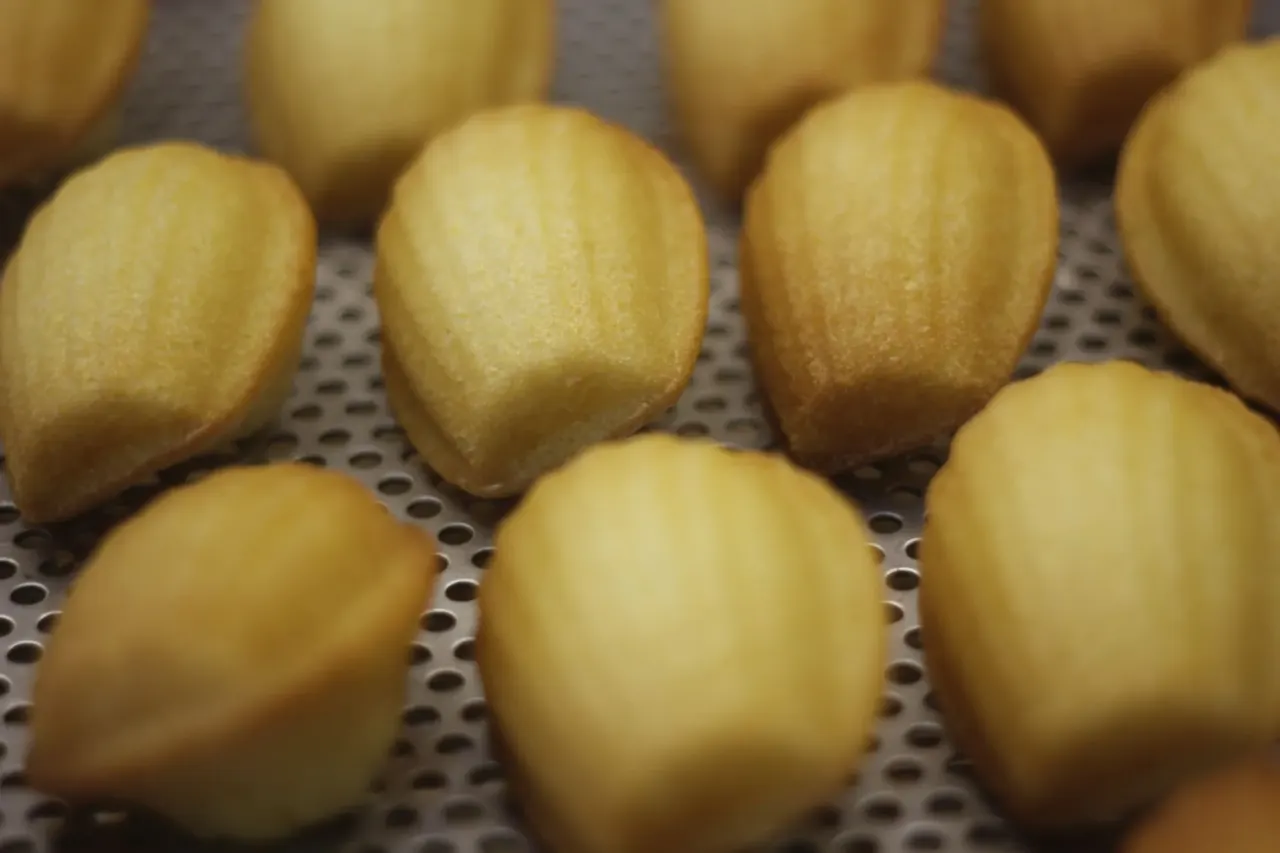
Well-domed honey madeleines rely on three things: a batter made with melted or browned butter, sweetened partly with honey; at least an hour’s rest in the fridge; then a start in a very hot oven at 220 °C before lowering it to 180 °C. It is the contrast between the cold batter and the fierce heat that makes the hump rise. This recipe makes around twenty madeleines.
Method
- Make the honey butter Melt the butter in a saucepan over a medium heat. For brown butter, cook it for a further 3 to 4 minutes: the butter foams, turns golden and smells of hazelnuts. Take off the heat, add the honey, stir and leave to cool until lukewarm.
- Whisk the eggs and sugar In a mixing bowl, whisk the eggs with the sugar and salt for 2 to 3 minutes, until the mixture turns slightly pale. Add the lemon zest if you like.
- Mix in the flour Sift the flour and baking powder over the bowl and mix with the whisk, without overworking, until no dry flour remains.
- Add the honey butter Pour in the warm honey butter in a thin stream, stirring until the batter is smooth and glossy.
- Chill the batter Cover the batter with cling film pressed onto the surface and put it in the fridge for at least 1 hour, ideally overnight. It should be well chilled and thick when it goes into the oven.
- Prepare the tin and oven Butter and flour the moulds of the tin (not needed for a silicone tin), then put it in the fridge. Preheat the oven to 220 °C, conventional setting, for at least 15 minutes.
- Fill the moulds Fill the moulds three-quarters full with the cold batter, using a piping bag or a spoon, without spreading it. Put the rest of the batter back in the fridge until the second batch.
- Bake the madeleines Bake at 220 °C for 4 minutes, then lower the oven to 180 °C and bake for a further 6 to 7 minutes, until the hump has formed and the edges are nicely golden. Honey browns quickly: keep an eye on the last few minutes.
- Turn out and repeat Turn them out straight away by tapping the tin on the work surface and leave to cool on a wire rack. Butter and flour the tin again, bring the oven back to 220 °C and repeat for the second batch.
Which honey should you choose?
Lavender honey harvested in Provence is the most classic choice: its delicate floral fragrance goes well with brown butter and lemon zest, without masking the taste of the madeleine. Mountain honey, rounder and more mellow, gives madeleines lightly malty notes. Avoid very strong honeys, which overpower such a simple batter. A crystallised honey works perfectly: it melts in the warm butter, with no need to liquefy it first. To understand this natural process, read our article on honey crystallisation.
Tips and variations
- The hump comes from the thermal shock: cold batter, cold tin and an oven well preheated to 220 °C. Do not skip the rest in the fridge.
- Do not fill the moulds to the brim: at three-quarters full, the batter rises towards the centre and forms the hump instead of overflowing.
- A metal tin browns the edges better than a silicone one. If you use silicone, place it on a perforated tray or a rack for even baking.
- Replace the lemon zest with orange zest, or add the seeds of half a vanilla pod to the honey butter.
- For a more generous teatime treat, the same pairing of butter and honey features in our honey cake.
Storage
Honey madeleines are best on the day they are made, still warm. They keep for 3 to 4 days in an airtight container, at room temperature, and stay soft thanks to the honey. They also freeze very well once cooled. The raw batter keeps for up to 48 hours in the fridge, well covered with cling film: so you can bake fresh madeleines two days running. More ideas await in our honey recipes.
Frequently asked questions
Why don’t my madeleines have a hump?
The batter was probably not cold enough or the oven not hot enough. Leave the batter to rest for at least an hour in the fridge, preheat the oven to 220 °C for 15 minutes and only lower it to 180 °C after the first 4 minutes of baking.
Can you replace all the sugar with honey in madeleines?
It is possible, but the batter becomes runnier and the madeleines brown faster. Keeping some sugar, as in this recipe, gives a more even texture and a more defined hump, while still letting the fragrance of the honey come through.
How long should madeleine batter rest?
At least an hour in the fridge, ideally overnight. A long rest thickens the batter and increases the temperature contrast when it goes into the oven, which helps form a well-shaped hump.
Can young children eat honey madeleines?
Yes, from one year old. Honey must never be given to a child under one year old, because of the risk of infant botulism, even in a baked preparation.
Cook next